Renewable energy is often discussed as a modern response to climate change, fuel security, and electricity demand, but its history is far older than the modern power grid. Long before coal mines, oil wells, gas pipelines, nuclear reactors, and utility-scale solar farms, societies depended on renewable energy because it was the energy available around them. Rivers turned mills. Wind pushed ships and pumped water. Wood, crop waste, and animal power supported heat, cooking, transport, and agriculture. Sunlight shaped building design, food drying, salt production, and basic thermal processes.
The modern renewable energy sector grew from these older energy systems, but it changed dramatically once electricity became the central form of modern power. Hydropower became the first large renewable electricity source. Wind power moved from mechanical pumping and milling into grid-connected generation. Solar energy moved from passive heating and scientific experiment into photovoltaic manufacturing, rooftop systems, utility-scale solar farms, and global supply chains. Geothermal energy developed from local heat use into a specialized power and heating sector. Biomass shifted from traditional fuel use into modern bioenergy, biofuels, waste-to-energy systems, and industrial heat applications.
The history of renewable energy is therefore not one story. It is the history of resource use, engineering, electrification, manufacturing, finance, grid planning, public policy, and supply-chain development. It is also a history of changing priorities. In some eras, renewable energy was used because there was no alternative. In others, it was pushed aside by fossil fuels that were easier to store, transport, and scale. In the modern era, renewable energy has returned to the center of energy strategy because electricity demand is rising, energy security has become more important, and countries are looking for power sources that can be built without permanent dependence on imported fuels.
Renewable Energy Before the Industrial Age
For most of human history, renewable energy was the foundation of economic life. The earliest energy systems were built around biomass, muscle power, water, wind, and sunlight. Wood was the dominant source of heat for cooking, metalworking, pottery, brickmaking, and home heating. Agricultural residues and animal waste were also used as fuels in many regions. These were not renewable in the modern policy sense, but they came from biological cycles rather than fossil deposits formed over millions of years.
Waterpower became one of the most important early energy sources because it could convert a natural flow into mechanical work. Waterwheels were used for grinding grain, sawing timber, crushing ore, processing textiles, and supporting early manufacturing. These systems were limited by geography, but where rivers and streams were available, waterpower became a local industrial base. Mills were often placed directly beside water sources because power could not yet be transmitted over long distances.
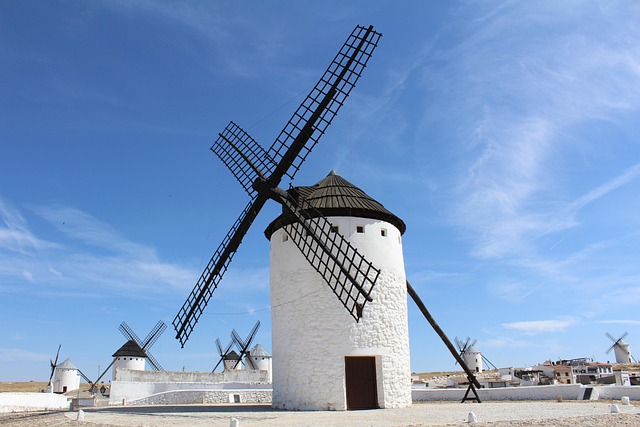
Wind energy followed a similar path. Sailing ships used wind as a transport fuel long before steam engines reshaped maritime trade. On land, windmills supported grain milling, irrigation, and drainage. They became especially important in areas where flat terrain, steady winds, and water-management needs created favorable conditions. The Dutch use of windmills for drainage is one of the best-known examples, but wind-powered mechanical work appeared across many regions.
Solar energy also had early practical uses. Buildings were oriented to capture warmth, food was dried in the sun, and solar heat was used in salt production and other basic processes. These applications did not look like the modern solar industry, but they reflected the same underlying principle: using local energy flows instead of mined fuel.
The key feature of pre-industrial renewable energy was locality. Energy systems were tied closely to place. A river, forest, windy plain, sunny climate, or agricultural cycle determined what kind of energy a community could use. There was little separation between the energy resource and the activity it powered.
The Industrial Revolution and the Fossil Fuel Shift
The Industrial Revolution changed the balance of energy history. Coal, and later oil and natural gas, offered something traditional renewable energy could not easily provide: dense, transportable, controllable fuel at industrial scale. Coal could be mined, stored, shipped, and burned when needed. It allowed factories to be built away from rivers. It powered steam engines, railroads, ships, iron production, and later electricity generation.
This did not eliminate renewable energy immediately. Waterpower continued to support factories and mills. Biomass remained important for heating and cooking. Wind still powered ships and rural mechanical systems. But fossil fuels changed the logic of energy supply. Instead of locating industry near a river or wind resource, industrial economies could move fuel to the point of demand. This was a major supply-chain breakthrough.
Coal also enabled the rise of centralized power. Steam engines turned heat into mechanical force, and later power plants turned heat into electricity. Once electricity networks expanded, energy became less visible to the final user. A household, factory, or city no longer needed to sit beside the primary energy source. Fuel could be extracted in one place, transported by rail or ship, burned in a central plant, and delivered as electricity.
Oil deepened this shift because it was especially useful for transport. Liquid fuels became central to cars, trucks, aircraft, ships, military logistics, and petrochemical production. Natural gas later became important for heating, industrial use, fertilizer, and power generation. Together, coal, oil, and gas created a fossil-fuel supply chain that renewable energy could not match at the time.
This period pushed renewables into a secondary role in many industrial economies. The problem was not that renewable resources disappeared. It was that the technology, storage systems, grid infrastructure, and policy frameworks did not yet exist to make them compete with fossil fuels across the full economy.
Hydropower and the First Large Renewable Electricity Systems
Hydropower was the first renewable energy source to become a major part of modern electricity systems. It had a natural advantage: water could provide steady mechanical force, and dams could store potential energy by holding water in reservoirs. Once electric generators and transmission systems improved, hydropower became one of the earliest ways to produce large volumes of electricity without burning fuel.
In the late nineteenth and early twentieth centuries, hydropower became central to electrification in many countries. Mountain regions, major river basins, and areas with high rainfall had clear advantages. Hydropower projects were often linked to industrial development because cheap electricity could attract aluminum smelting, mining, chemicals, steel, and other energy-intensive industries.
Hydropower also changed the scale of renewable energy infrastructure. Earlier waterwheels were local mechanical systems. Modern hydroelectric dams became national development projects. They required engineering surveys, concrete, turbines, generators, transmission lines, roads, financing, and long-term state planning. They also created new supply chains around heavy equipment, civil engineering, river management, and grid integration.
The sector developed in different ways across regions. In North America and Europe, hydropower supported early electrification and industrial expansion. In parts of Latin America, Africa, and Asia, it became central to national development strategies. In countries with limited fossil fuel reserves but strong river systems, hydropower offered energy independence and lower fuel-import exposure.
Hydropower also showed that renewable energy could have major environmental and social costs. Large dams changed river ecosystems, affected fisheries, displaced communities, altered sediment flows, and created disputes over water use. These issues became more visible as the sector matured. As a result, the modern hydropower industry includes not only dam construction and turbine manufacturing but also environmental review, resettlement policy, river-basin planning, dam safety, and climate-risk analysis.
Hydropower remains historically important because it proved that renewable energy could operate at grid scale. It became the bridge between traditional renewable energy and the modern renewable electricity sector.
Wind Energy From Mechanical Work to Grid Power
Wind energy has one of the longest histories of any renewable source, but its modern supply chain is very different from its early forms. Traditional windmills converted wind into mechanical work. They milled grain, pumped water, and drained land. These systems were valuable in rural economies because they allowed communities to use local wind without fuel supply.
The move from mechanical wind power to wind-generated electricity began with small machines and experimental systems. Early wind turbines were used in isolated areas where grid electricity was unavailable or expensive. Farms, remote homes, and research sites used wind power to charge batteries or provide limited electricity.
The modern wind industry began to take shape in the twentieth century, especially as energy security concerns and oil price shocks pushed governments and engineers to reconsider alternatives to fossil fuels. Denmark became especially important in wind technology development, combining agricultural engineering, cooperative ownership, and policy support. The United States also supported wind development, particularly in California, where early wind farms became part of the first commercial wave of modern wind power.
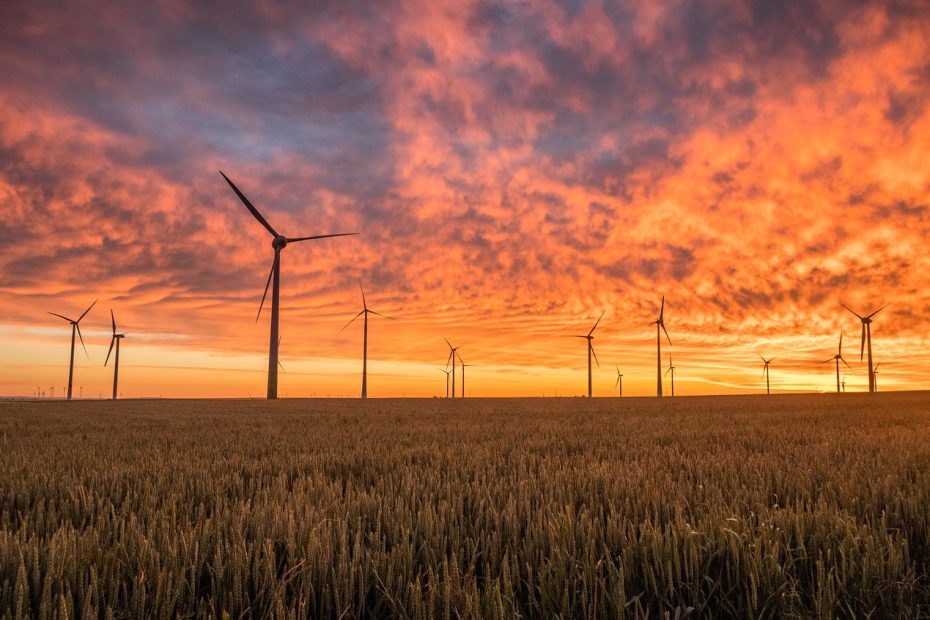
Wind technology improved through larger rotor diameters, taller towers, better blade materials, advanced gearboxes, improved generators, digital controls, and more accurate wind mapping. The industry moved from small turbines to utility-scale machines and then into offshore wind, where stronger and more consistent winds could support large projects.
The wind supply chain became highly specialized. It includes blade manufacturing, tower fabrication, nacelle assembly, bearings, gearboxes, power electronics, control systems, foundations, cranes, transport equipment, port infrastructure, vessels for offshore installation, grid interconnection, and long-term maintenance services. The physical size of modern wind components makes logistics one of the defining challenges of the sector. Blades, towers, and offshore foundations require specialized roads, ports, vessels, and lifting equipment.
Wind power also changed the way grid operators think about electricity. Unlike coal, gas, nuclear, or reservoir hydropower, wind output varies with weather. This made forecasting, balancing, transmission planning, and energy storage more important. The modern wind sector is therefore not only a turbine industry. It is also a grid-integration industry.
Solar Energy and the Rise of Photovoltaic Manufacturing
Solar energy’s modern history began in science and space technology before becoming one of the world’s fastest-growing sources of electricity. Solar thermal ideas existed earlier, but photovoltaic cells became the breakthrough technology because they could convert sunlight directly into electricity. Early solar cells were expensive and used mainly in specialized applications, including satellites, remote equipment, telecommunications, navigation systems, and off-grid power.
The first major commercial advantage of solar photovoltaics was not that they were cheap. It was that they could operate where fuel delivery and grid access were difficult. A solar panel could power remote systems without a constant fuel supply. This made solar useful for telecom towers, rural electrification, water pumping, islands, and isolated infrastructure.
The solar industry changed dramatically as manufacturing scaled. Improvements in silicon processing, wafer production, cell efficiency, module assembly, inverters, mounting systems, and installation practices reduced costs over time. Global supply chains became central to solar’s expansion. Polysilicon production, ingot and wafer manufacturing, cell production, module assembly, glass, aluminum frames, junction boxes, inverters, and battery systems all became part of the solar economy.
China became the dominant force in solar manufacturing, reshaping the global sector through scale, industrial policy, export capacity, and cost reduction. This created a powerful supply-chain advantage but also raised concerns in many countries about import dependence, trade disputes, industrial concentration, forced-labor risks, and the need for domestic manufacturing capacity.
Solar power also changed the geography of electricity. Unlike large hydro dams or fossil fuel power plants, solar can be deployed at many scales. It can sit on rooftops, farms, deserts, warehouses, schools, parking structures, and utility-scale project sites. This flexibility made solar attractive for both developed and emerging markets.
The supply chain for solar projects includes land acquisition, permitting, resource assessment, panels, inverters, mounting structures, grid connection, battery storage, financing, power purchase agreements, and operations. In rooftop markets, it also includes customer acquisition, installers, electricians, net metering rules, and distribution-grid planning.
Solar’s rise is one of the most important energy supply-chain stories of the twenty-first century. It turned a high-cost niche technology into a global commodity industry and gave many countries a way to expand electricity generation without importing fuel.
Geothermal Energy and the Use of Underground Heat
Geothermal energy developed along a different path from wind and solar because it depends on specific geology. While the sun and wind are widely distributed, high-quality geothermal resources are concentrated in areas with volcanic activity, tectonic movement, hot springs, or favorable underground heat conditions.
The earliest geothermal uses were direct uses of heat. Hot springs and naturally heated water were used for bathing, cooking, heating, and agriculture in many cultures. Modern geothermal energy expanded when engineers learned how to use underground steam and hot water for electricity generation, district heating, greenhouse agriculture, and industrial processes.
Geothermal power has several advantages. It can provide steady electricity, unlike variable wind and solar. It uses a small land footprint compared with many other energy sources. It can support local heating systems and reduce dependence on imported fuels. Countries with strong geothermal resources can use it as a reliable domestic energy source.
The supply chain is closer to oil and gas than to solar or wind in some respects. Geothermal development requires exploration, geological surveys, drilling, reservoir testing, wellfield management, steam gathering systems, turbines, power plants, reinjection wells, and long-term resource monitoring. Drilling risk is one of the biggest barriers because developers may spend heavily before confirming that a resource can produce commercially useful heat.
Geothermal has been important in countries and regions such as Iceland, Kenya, New Zealand, Indonesia, the Philippines, the western United States, Italy, and parts of Latin America. Its role is often highly strategic because the resource is local and stable. In places with strong geothermal potential, it can support energy security, baseload power, industrial heating, and rural development.
New geothermal technologies, including enhanced geothermal systems, are designed to expand the resource base beyond traditional volcanic or hydrothermal areas. If these technologies mature, geothermal could become relevant in more countries. Its future will depend on drilling costs, subsurface engineering, financing, resource risk, and the ability to connect heat resources to electricity and heating demand.
Biomass, Biofuels, and the Modern Bioenergy Supply Chain
Biomass is the oldest renewable energy source, but modern bioenergy is much more complex than traditional wood burning. Today, bioenergy includes solid biomass, biogas, waste-to-energy, landfill gas, ethanol, biodiesel, renewable diesel, sustainable aviation fuel, and industrial heat applications.
The history of biomass is closely tied to agriculture, forestry, waste management, and transport fuels. Traditional biomass provided heat and cooking energy for centuries. In many developing countries, it remains important for households, though often with health and environmental challenges when burned inefficiently.
Modern biomass systems are built around controlled supply chains. Wood pellets, agricultural residues, forestry byproducts, municipal waste, animal manure, used cooking oil, sugarcane, corn, soy, palm oil, and other feedstocks can be converted into energy products. These systems require collection, transport, preprocessing, storage, conversion, distribution, and emissions control.
Biofuels became especially important because liquid fuels are difficult to replace in transport. Ethanol and biodiesel offered a way to blend renewable fuels into existing gasoline and diesel markets. Brazil’s sugarcane ethanol sector became one of the most important examples of large-scale biofuel development, while the United States built a major corn ethanol industry. Biodiesel and renewable diesel developed around vegetable oils, animal fats, and waste oils.
Bioenergy also has difficult tradeoffs. Feedstock supply can compete with food production, forests, land use, water use, and biodiversity. The climate value of bioenergy depends heavily on how the feedstock is produced, transported, processed, and burned. A well-managed waste-to-energy or biogas system can reduce methane emissions and support circular economy goals. A poorly managed land-intensive biofuel system can create serious environmental costs.
The supply-chain history of bioenergy is therefore a history of trying to turn biological material into reliable commercial fuel while managing land, food, waste, and emissions. Its future is likely to be strongest in sectors where direct electrification is difficult, including aviation, shipping, heavy industry, and some forms of dispatchable power and heat.
The Oil Crises and the Return of Renewable Energy Policy
The modern renewable energy movement gained momentum during the energy crises of the 1970s. High oil prices, supply disruptions, and geopolitical risk forced many governments to reconsider dependence on imported fossil fuels. Renewable energy was not yet ready to replace oil, coal, or gas at scale, but the crises changed research priorities and public policy.
Governments funded solar research, wind demonstrations, efficiency programs, alternative fuels, and energy-conservation efforts. Universities, laboratories, utilities, and private firms began testing technologies that would later become commercially important. Some early projects failed or remained too expensive, but the period created institutional knowledge and technical experience.
The energy crises also helped define a recurring theme in renewable energy history: renewables advance fastest when they are tied to energy security, not only environmental goals. Countries that worry about imported fuel exposure, price volatility, shipping routes, sanctions, or foreign exchange pressure often see domestic renewable energy as a strategic asset.
However, the first major wave of modern renewable policy faced problems. Fossil fuel prices later fell, political attention shifted, and some support programs weakened. Many technologies were still costly. Grid systems were designed around centralized fossil fuel and hydropower plants, not variable renewable generation. Financing models were immature, and supply chains were small.
Even so, the 1970s and early 1980s helped launch the modern renewable sector. They supported early wind markets, solar research, biofuel policy, efficiency standards, and public awareness. The period did not create a full energy transition, but it created the technical and policy foundation for one.
Climate Policy, Market Reform, and the Growth of Modern Renewables
By the late twentieth and early twenty-first centuries, climate policy became a major driver of renewable energy growth. Concerns about carbon dioxide emissions, air pollution, and long-term environmental risk pushed governments to support low-carbon energy sources. At the same time, electricity market reforms opened new opportunities for independent power producers, private developers, and project finance.
Policy tools became central to renewable deployment. Feed-in tariffs, renewable portfolio standards, tax credits, auctions, green certificates, net metering, concessional finance, and public procurement all helped create markets. These policies reduced investor risk and allowed technologies to scale. As deployment increased, manufacturers improved production, developers gained experience, installers became more efficient, and costs fell.
Wind and solar benefited especially from this cycle. More demand supported larger factories. Larger factories reduced unit costs. Lower costs made more projects viable. More projects improved construction and operating experience. This feedback loop became one of the most important forces in modern energy history.
Renewable energy also became linked to industrial strategy. Countries began to view clean-energy manufacturing as an economic opportunity. Solar panels, batteries, wind turbines, electrolyzers, inverters, heat pumps, grid equipment, and critical minerals became part of national competitiveness. Energy transition policy moved beyond power generation into manufacturing, trade, workforce development, and supply-chain security.
The modern renewable sector also benefited from financial innovation. Power purchase agreements, green bonds, infrastructure funds, development-bank financing, corporate clean-energy procurement, and climate-focused investment vehicles helped expand project pipelines. Large companies began buying renewable electricity directly to meet corporate energy and emissions goals.
This period transformed renewables from alternative energy into mainstream infrastructure. Wind farms, solar parks, rooftop solar, battery storage, and renewable auctions became normal parts of national electricity planning. The sector was no longer defined only by environmental advocacy. It became a major investment category.
Critical Minerals and the New Renewable Energy Supply Chain
As renewable energy expanded, the supply chain became more mineral-intensive. Wind turbines, solar panels, batteries, electric vehicles, transmission lines, and power electronics require large quantities of metals and specialized materials. Copper, lithium, nickel, cobalt, manganese, graphite, rare earth elements, silicon, aluminum, silver, and steel all became more important to energy planning.
This created a new supply-chain challenge. Fossil fuel systems depend on continuous fuel extraction and delivery. Renewable systems require heavy upfront material inputs, but once built, they operate without fuel in the case of wind and solar. That shifts energy security concerns from fuel supply to equipment, minerals, manufacturing, grid infrastructure, and recycling.
Mining and processing capacity became a major issue. Many critical minerals are geographically concentrated, and processing is often even more concentrated than mining. Countries that want to build renewable energy systems must therefore think about upstream mining, refining, component manufacturing, shipping routes, trade policy, and recycling.
This does not make renewable energy the same as fossil fuel energy. A solar panel or wind turbine does not require a constant stream of coal, oil, or gas to produce electricity. But it does mean renewable energy depends on industrial supply chains that must be planned, secured, and monitored.
Battery storage increased the importance of this issue. As solar and wind gained market share, grids needed more flexibility. Batteries became a key tool for storing electricity, balancing short-term supply and demand, and supporting grid reliability. This strengthened the link between renewable power and mineral supply chains.
The next stage of renewable history will depend heavily on whether countries can build cleaner, more diversified, and more resilient supply chains for the materials and equipment behind the energy transition.
Grid Integration and the Challenge of Renewable Electricity
The rise of renewable energy changed the role of electricity grids. Traditional power systems were built around controllable power plants that generated electricity near fuel supply, water resources, or major demand centers. Wind and solar are different because they depend on weather, land availability, and resource geography.
This creates several supply-chain and infrastructure challenges. Renewable projects must be connected to the grid, often in rural or remote areas where transmission capacity is limited. Solar output peaks during daylight hours. Wind output varies by season, time of day, and weather pattern. Hydropower depends on rainfall, snowmelt, reservoirs, and river conditions. These patterns require better forecasting, flexible generation, storage, interconnection, demand response, and grid management.
Transmission has become one of the most important bottlenecks in the renewable sector. A country can have excellent solar or wind resources, but if it cannot move electricity from project sites to cities and industrial centers, the resource cannot be fully used. Grid congestion can delay projects, reduce output, and increase costs.
Distribution grids also matter. Rooftop solar, electric vehicles, heat pumps, batteries, and local generation change the way electricity flows through low-voltage networks. Instead of electricity moving only from large power plants to consumers, power can move in multiple directions. This requires new planning, digital controls, smart meters, voltage management, and updated utility regulation.
The history of renewable energy is therefore increasingly a history of grid modernization. Building more solar panels and wind turbines is not enough. Countries also need transmission lines, substations, interconnectors, storage systems, flexible markets, and regulatory systems that can manage a more complex power system.
Renewable Energy in Emerging Markets
Renewable energy has a different history in emerging markets than in older industrial economies. In many countries, the main issue is not replacing existing fossil fuel power. It is expanding electricity access, supporting urban growth, reducing fuel imports, and building infrastructure fast enough to meet demand.
Hydropower has long played a major role in emerging-market electrification where river systems are strong. More recently, solar and wind have become attractive because they can be built faster than many large thermal or hydro projects. Solar can also support rural electrification, mini-grids, telecom towers, irrigation, schools, clinics, and small businesses.
For fuel-importing countries, renewables can reduce exposure to global oil, coal, and gas markets. This is especially important where foreign exchange reserves are limited or fuel subsidies strain public budgets. A solar farm or wind project may require imported equipment, but it does not require imported fuel every year after construction.
Financing remains a major barrier. Many emerging markets face high capital costs, currency risk, weak utilities, uncertain regulation, and limited grid capacity. Renewable projects may be technically attractive but financially difficult without development-bank support, guarantees, concessional loans, or stable power purchase agreements.
The supply chain in emerging markets often includes imported equipment, foreign engineering firms, local construction contractors, state utilities, development banks, and international climate finance. Over time, some countries try to localize parts of the supply chain, including assembly, installation, maintenance, civil works, and workforce training.
Renewable energy in emerging markets is not only a climate story. It is also a development story. It affects electricity access, industrial growth, import bills, public finance, rural services, and regional power trade.
The Future of Renewable Energy
The future of renewable energy will be shaped by scale, storage, grids, manufacturing, minerals, and policy. Wind and solar are likely to remain central because they can be deployed in many countries and continue to benefit from large global supply chains. Hydropower will remain important where geography allows it, especially for storage and grid balancing. Geothermal could expand if drilling technology improves. Bioenergy will remain relevant where sustainable feedstocks can serve transport, industry, waste management, and dispatchable energy needs.
The biggest challenge is not whether renewable energy can generate electricity. That has already been proven. The larger challenge is building full energy systems around it. This means expanding grids, speeding up permitting, improving storage, strengthening supply chains, managing mineral demand, training workers, and designing electricity markets that reward flexibility and reliability.
Renewable energy will also become more closely tied to industrial policy. Countries will compete to manufacture solar panels, batteries, wind components, electrolyzers, grid equipment, and clean fuels. They will also compete to secure minerals, processing capacity, shipping routes, and recycling systems. The renewable energy transition will therefore reshape trade relationships as much as power generation.
Another major question is how renewables will support sectors that are hard to electrify directly. Heavy industry, shipping, aviation, chemicals, and high-temperature heat may require green hydrogen, synthetic fuels, advanced biofuels, electrified industrial processes, or carbon management. These sectors will determine how far renewable energy can move beyond the power grid into the wider economy.
The history of renewable energy shows a long shift from local natural resource use to industrial-scale clean power systems. Its future will depend on whether countries can build the infrastructure and supply chains needed to turn renewable resources into reliable energy for entire economies.
Conclusion: Renewable Energy as an Energy System
Renewable energy began as the original energy base of human society. Water, wind, biomass, sunlight, and underground heat supported work, heat, transport, and agriculture long before modern fuel industries existed. Fossil fuels later displaced many renewable systems because they were dense, transportable, and easier to scale for industrial use.
The modern renewable energy sector has reversed part of that history. Hydropower proved that renewable electricity could operate at large scale. Wind and solar became global industries through technology, manufacturing, policy support, and falling costs. Geothermal and bioenergy added specialized forms of heat, power, and fuel. Battery storage, transmission, critical minerals, and grid modernization now define the next stage.
Renewable energy is no longer a narrow alternative to conventional power. It is a major part of global energy strategy, with its own supply chains, infrastructure needs, industrial competition, and security concerns. Its history is still being written through the systems countries build around it.