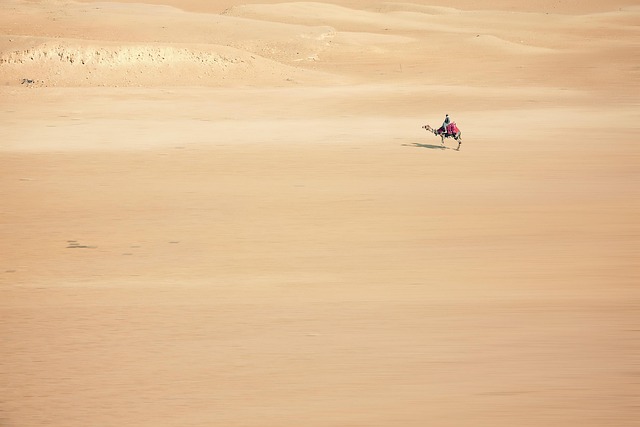
Egypt’s renewable energy opportunity is based on scale. The country has extensive desert land, intense solar radiation, strong wind corridors near the Red Sea, a large electricity market, and a strategic position connecting Africa, the Middle East, and the Mediterranean. These conditions give Egypt the resources to develop one of the region’s largest renewable power systems.
Actual generation, however, remains far below that potential. Egypt continues to rely heavily on natural gas for electricity, and renewables supplied only about 11.5% of power generation when the government reaffirmed its target of reaching 42% by 2030.
The gap between the existing system and the national target defines Egypt’s renewable energy story. The country does not need to prove that utility-scale solar and wind projects can be built. It must show that projects can be financed, connected, stored, and delivered quickly enough to reduce pressure on gas supplies while meeting rising electricity demand.
Solar Development Is Moving Beyond the Benban Model
Egypt’s modern solar industry is closely associated with Benban, the large solar complex near Aswan. The project demonstrated that international lenders, developers, government agencies, and private investors could coordinate multiple utility-scale installations within a common development zone.
Benban also established Upper Egypt as a major center for solar generation. The region combines strong sunlight, large areas of desert land, and access to high-voltage infrastructure. Its success helped Egypt move from smaller renewable projects toward a model capable of attracting international capital at greater scale.
The country’s solar pipeline has since expanded geographically and technologically. A 200 MW project at Kom Ombo was developed as one of Egypt’s largest privately financed solar plants. More recent proposals are considerably larger and increasingly include battery storage.
A 1 GW solar plant planned at Nagaa Hammadi includes a 200 MWh battery energy storage system. The project is designed to sell electricity to the Egyptian Electricity Transmission Company under a long-term power-purchase agreement.
In January 2026, Egypt announced renewable energy agreements worth approximately $1.8 billion, including plans for a 1.7 GW solar facility in Minya supported by 4 GWh of battery storage. The agreements also included a battery-manufacturing facility in the Suez Canal Economic Zone.
These projects indicate a significant change in the role of solar power. Earlier developments focused primarily on adding daytime electricity. New projects are beginning to pair generation with storage, giving operators more control over when power reaches the grid. This is important in Egypt, where peak electricity demand can continue after solar output declines in the evening.
Storage can also reduce curtailment, support frequency control, and make large renewable projects more useful to the national system. Its growth will not eliminate the need for gas-fired flexibility, but it can reduce the amount of fossil generation required to balance solar production.
The Gulf of Suez Gives Egypt a Second Renewable Center
Egypt’s wind industry is concentrated along the Gulf of Suez and parts of the Red Sea coast. Wind conditions in this corridor are among the strongest in the region, with favorable speeds and relatively consistent production profiles.
Existing wind facilities at Zafarana, Gabal El-Zeit, and Ras Ghareb have established the area as the country’s main wind-generation zone. New projects continue to attract state-backed and private investment. A further 200 MW wind farm at Ras Ghareb, financed with support from the European Bank for Reconstruction and Development, is intended to sell power to the national transmission company.
Wind offers Egypt several advantages over an electricity strategy based only on solar. Production can continue at night, and the Gulf of Suez resource may generate strongly during periods when solar availability is lower. A combined portfolio of wind, solar, hydropower, storage, and flexible thermal generation is therefore more valuable than a system dominated by a single renewable technology.
The Suez region also has industrial importance. Renewable electricity produced near ports, manufacturing zones, and shipping routes could eventually support low-carbon hydrogen, ammonia, steel, fertilizers, and maritime fuels. Egypt has promoted the Suez Canal Economic Zone as a location for green hydrogen and export-oriented industry, although many announced projects remain at an early stage.
Turning wind resources into export industries will require long-term offtake contracts, water and desalination capacity, port infrastructure, transmission investment, and internationally recognized emissions standards. Domestic electricity needs will also compete with export-oriented hydrogen production for new renewable generation.
Hydropower Provides Stability but Limited Expansion
Hydropower was Egypt’s first major renewable electricity source. The Aswan High Dam and related Nile facilities have supplied electricity for decades and continue to provide dispatchable generation that can support the wider power system.
Its role is different from that of solar and wind. Hydropower can respond more predictably to system needs, making it useful for balancing variable generation. However, Egypt has limited room for major additional hydropower development, and output depends on Nile water conditions, reservoir management, irrigation requirements, and regional water politics.
For this reason, future renewable growth will come primarily from solar and wind rather than new large dams. Existing hydropower will remain strategically useful as part of the balancing system, even as its share of total capacity declines.
This distinction matters when measuring Egypt’s renewable progress. Hydropower provides an established base, but reaching the 2030 target requires rapid additions of newer technologies rather than relying on legacy generation.
Grid Capacity Is Becoming the Decisive Constraint
Egypt’s strongest solar and wind resources are often located far from Cairo, Alexandria, the Nile Delta, and other major demand centers. Renewable expansion therefore depends on transmission lines and substations capable of moving large volumes of electricity across long distances.
The national grid was developed around conventional power stations and existing population centers. Adding several gigawatts of remote desert generation requires reinforcement at both transmission and distribution levels. Without those investments, projects may face connection delays, congestion, curtailment, or restrictions on output.
Under Egypt’s Nexus of Water, Food and Energy program, the European Bank for Reconstruction and Development has supported a wider $2 billion grid-investment program intended to unlock renewable development. The program includes transmission upgrades and is directly linked to the 42% renewable electricity target for 2030.
In late 2025, the EBRD provided a €200 million financing package to the Egyptian Electricity Transmission Company as the first grid investment under that initiative.
Grid expansion must be coordinated with the project pipeline. Building transmission after renewable plants are completed can leave expensive assets underused. Building it too early can burden the electricity system with infrastructure costs before generation arrives. Egypt must therefore align land allocation, project approvals, financing, substations, transmission corridors, and commercial operation dates.
Digital control systems, forecasting, storage, and electricity-market rules will also become more important as the share of variable generation increases.
Private Investment Is Reshaping the Electricity Market
Egypt cannot finance its renewable transition through public spending alone. Its development model increasingly depends on private developers, international lenders, climate-finance institutions, equipment suppliers, and long-term power-purchase agreements.
The Benban program showed how feed-in tariffs and international finance could bring multiple developers into the market. More recent projects rely on competitive agreements, direct contracting, and negotiated power-purchase structures.
A notable reform is the introduction of private-to-private electricity sales. In 2025, four renewable projects with a combined capacity of 400 MW were approved to contract directly with electricity consumers under a pilot framework.
This approach could allow industrial companies to purchase renewable power without depending entirely on the traditional state-utility model. It may be especially attractive to exporters that must reduce the carbon intensity of their products to remain competitive in European and other international markets.
However, investors continue to evaluate currency exposure, payment security, import costs, regulatory stability, and the financial position of public-sector offtakers. Egypt’s renewable resources may be excellent, but low-cost sunlight and wind do not remove macroeconomic or contractual risk.
The pace of development will depend on whether projects can achieve bankable terms while keeping electricity affordable for domestic users.
Egypt Must Convert Announcements Into Connected Capacity
Egypt has the physical resources and project pipeline required to become a major renewable energy market. Solar development is growing larger, wind investment remains active around the Gulf of Suez, batteries are entering utility-scale plans, and new commercial rules are opening space for private electricity contracts.
The main test is execution. Reaching 42% renewable electricity by 2030 requires projects to move from memoranda and land agreements into financing, construction, grid connection, and sustained operation. It also requires transmission expansion to progress alongside generation.
Egypt’s renewable future will be determined not by a shortage of sunlight, wind, land, or investor interest, but by whether the country can coordinate grid infrastructure, finance, storage, regulation, and electricity demand at the speed its target requires.