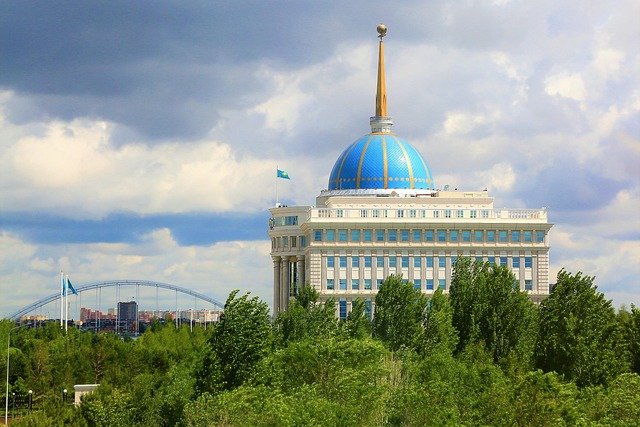
Kazakhstan occupies an unusual position in the global nuclear industry. It is the world’s leading uranium-producing country, manufactures nuclear fuel components and hosts the International Atomic Energy Agency’s low-enriched uranium bank. Yet it has not generated commercial nuclear electricity since the BN-350 reactor at Aktau was shut down in 1999.
That gap is now set to close. Kazakhstan has committed to building a large nuclear power plant near Ulken, on the shore of Lake Balkhash, as part of a wider strategy to strengthen electricity security and reduce dependence on aging coal-fired capacity. Russia’s Rosatom will lead the international consortium for the first project, while China National Nuclear Corporation is positioned to lead a second plant.
The program represents more than the addition of another generating technology. Kazakhstan is attempting to connect its uranium resources, fuel-cycle capabilities, scientific institutions and electricity system into a larger domestic nuclear industry. Its success will depend on financing, project management, regulation, workforce development and public confidence.
The Balkhash Nuclear Power Plant Moves From Debate to Delivery
Nuclear construction was debated in Kazakhstan for years before the government placed the issue before voters. In the October 2024 referendum, 71.12% of participating voters supported building a nuclear power plant. The result provided political authority for the project, although it did not remove concerns about cost, safety, foreign dependence or the country’s nuclear history.
Kazakhstan evaluated proposals from Rosatom, China National Nuclear Corporation, France’s EDF and Korea Hydro & Nuclear Power. The Atomic Energy Agency selected Rosatom’s offer as the most advantageous and named the Russian company as leader of the consortium in 2025. The assessment considered reactor safety, financing, international experience, localization, workforce preparation and cooperation across the nuclear fuel cycle.
In May 2026, Kazakhstan and Russia signed the intergovernmental agreement for the Balkhash Nuclear Power Plant. The project is planned with two Generation III+ VVER-1200 pressurized-water reactors. Its estimated cost is about $16.5 billion, including spending on physical protection and supporting infrastructure, with a Russian state export loan expected to provide much of the financing.
Construction is scheduled to begin in 2027, and the first unit is targeted for operation in the early 2030s. Large nuclear projects often face schedule and cost pressure, so these dates will depend on site preparation, licensing, equipment delivery and the creation of a qualified domestic workforce. Kazakhstan will also need to define how much of the engineering, construction and long-term maintenance can be localized.
A Coal-Heavy Power System Needs Reliable New Capacity
Kazakhstan’s case for nuclear power is rooted in the structure of its electricity system. Coal supplied 58% of national generation in 2023, according to the International Energy Agency. Many thermal plants and network assets are aging, while electricity demand is rising with population growth, industrial development, urbanization and digital activity.
The country has expanded wind and solar power, and hydropower remains important in the east and southeast. These sources can reduce emissions and diversify generation, but Kazakhstan also wants large plants that can provide continuous output. Nuclear power is being positioned as a source of low-carbon baseload generation able to support industrial demand and limit the need for electricity imports.
The location near Lake Balkhash also places the project close to the southern power zone, where demand growth and supply constraints are important concerns. However, the site will require careful management of cooling water, environmental effects and transmission connections. The plant will not solve every weakness in the electricity system; grid modernization and investment in flexible generation will still be required.
A two-unit station would be large in relation to Kazakhstan’s present grid. System operators will need enough reserve capacity and network strength to manage maintenance or an unexpected outage at one unit. This makes transmission planning part of the nuclear project rather than a separate infrastructure issue.
Uranium Leadership Gives Kazakhstan a Stronger Starting Position
Kazakhstan is not entering nuclear energy without an industrial base. It has led global natural uranium mining since 2009, with production centered on in-situ recovery operations. National producer Kazatomprom has partnerships and supply relationships across major nuclear markets.
The Ulba Metallurgical Plant in Oskemen produces uranium fuel products and supports fuel-assembly manufacturing. The same site hosts the IAEA Low Enriched Uranium Bank, a reserve of 90 metric tons intended to provide an assurance of supply to eligible member states if normal commercial routes become unavailable.
These assets give Kazakhstan knowledge of nuclear materials, safeguards, quality control and international fuel markets. The National Nuclear Center also operates research facilities and supports work in reactor physics, radiation safety, materials science and environmental monitoring.
Even so, uranium mining and fuel manufacturing are not the same as operating a commercial nuclear power station. Kazakhstan will need reactor operators, regulators, emergency planners, maintenance specialists, security personnel and engineers trained for the selected VVER technology. Agreements with Rosatom are therefore expected to include education and workforce development alongside construction and fuel supply.
Nuclear History Makes Public Trust a Structural Issue
Kazakhstan’s relationship with nuclear technology cannot be separated from the Soviet nuclear weapons tests conducted at Semipalatinsk between 1949 and 1989. More than 450 tests took place at the site, leaving contaminated areas and long-term health and environmental consequences. Kazakhstan closed the test site in 1991, renounced the nuclear weapons left on its territory after the Soviet collapse and developed a prominent international role in nuclear non-proliferation.
This history creates a distinction between peaceful nuclear energy and nuclear weapons, but it also explains why safety claims receive close scrutiny. The referendum established majority support for construction, yet trust will depend on transparent regulation, independent oversight, emergency planning and access to environmental information throughout the plant’s life.
The government’s creation of a dedicated Atomic Energy Agency strengthened the institutional focus on the sector. Its credibility will be tested by how clearly it separates project promotion from nuclear safety regulation and how openly it communicates decisions about the plant.
A Multi-Plant Program Could Reshape Kazakhstan’s Energy Sector
The first plant is no longer Kazakhstan’s only nuclear ambition. The government has discussed building a second and possibly a third station, with China National Nuclear Corporation expected to play a leading role in the next project. Using more than one international partner could diversify technology and financing relationships, although it may also create additional demands for regulation, training, spare parts and fuel management.
Kazakhstan’s nuclear program therefore has two possible scales. At the smaller scale, the Balkhash plant would replace part of an aging fossil-fuel system and add reliable low-carbon generation. At the larger scale, several plants could create a new industrial sector connecting mining, fuel production, engineering, research and electricity generation.
The immediate challenge is execution. Kazakhstan has the uranium resources, political commitment and international partners needed to begin. The decisive factors will be whether it can control costs, build regulatory capacity, protect Lake Balkhash, develop local expertise and complete the first reactors on a credible schedule.