Oil is one of the central commodities in modern economic history. It has powered transport systems, military strategy, industrial growth, petrochemical manufacturing, consumer goods, electricity generation, and global trade. The history of oil is not only the history of drilling wells and producing crude. It is the history of a complex supply chain that connects geology, engineering, finance, refining, shipping, pipelines, storage, retail fuel networks, and state power.
Before oil became the defining fuel of the twentieth century, societies used natural seeps, bitumen, and petroleum-like substances for waterproofing, lighting, medicine, construction, and military purposes. The modern oil industry, however, emerged when petroleum became a scalable industrial commodity. Once crude oil could be drilled, transported, refined, and sold in large volumes, it moved from local curiosity to global energy system.
The oil supply chain developed in stages. First came exploration and drilling. Then came refining, which turned crude oil into kerosene, gasoline, diesel, lubricants, fuel oil, asphalt, and petrochemical feedstocks. Pipelines, railroads, tankers, storage terminals, ports, and retail distribution networks followed. Over time, oil became tied to national security, industrial policy, consumer mobility, and international diplomacy.
Early Uses of Oil Before the Modern Petroleum Industry
Oil has a much older history than the modern oil industry. Natural petroleum seeps were known in parts of the Middle East, Central Asia, China, Europe, and North America long before commercial drilling began. Ancient societies used bitumen and asphalt for waterproofing boats, sealing buildings, paving roads, and binding construction materials. In some regions, oil and tar were also used in lamps, medicines, and military applications.
These early uses were limited by supply. Oil gathered from seeps could be useful, but it was not yet an industrial fuel system. Production was irregular, transport was difficult, and processing technology was basic. Before the nineteenth century, the world’s main energy sources were wood, charcoal, animal power, wind, water, and, increasingly, coal. Coal became the first major industrial fuel because it could power steam engines, railways, factories, and urban heating systems at scale.
Oil’s rise required a different set of conditions. It needed drilling methods capable of reaching underground reservoirs. It needed refining technology that could separate crude oil into usable products. It needed markets that were ready to buy those products. The first major commercial breakthrough came not from gasoline, but from lighting.
Before electric light, many households and businesses relied on candles, whale oil, coal gas, and other fuels for illumination. Whale oil was expensive, supply was uncertain, and demand for better lighting was growing. Kerosene refined from petroleum offered a cheaper and more scalable alternative. This made lighting the first major mass market for the petroleum industry.
The Birth of the Modern Oil Industry
The modern oil industry is usually traced to the commercial drilling boom of the mid-nineteenth century. The 1859 Drake Well in Pennsylvania became a symbol of the new industry because it showed that petroleum could be drilled commercially and produced in meaningful quantities. The well itself was modest by later standards, but it helped launch an oil rush in western Pennsylvania and created a new model for energy extraction.
This early industry was chaotic. Producers rushed to drill wells, crude oil prices swung sharply, and storage was often inadequate. Oil was first moved in barrels by wagon, river, canal, and rail. The famous 42-gallon oil barrel became part of the industry’s commercial language, even after physical barrels were mostly replaced by pipelines, tanks, and tankers.
Refining quickly became the key to value. Crude oil by itself was less useful than the products that could be separated from it. Early refiners focused heavily on kerosene, which could be sold for lamps. Other fractions, including gasoline, were initially less valuable. Gasoline was sometimes treated as a byproduct before the rise of the internal combustion engine transformed it into one of the world’s most important fuels.
The early oil business rewarded control over logistics. A company that could manage drilling, refining, transport, storage, and sales had a major advantage over scattered producers. That reality pushed the industry toward integration. Oil was not only a resource business. It was a supply-chain business from the beginning.
Refining Turns Crude Oil Into an Industrial Commodity
The growth of refining changed the meaning of oil. Crude oil is a mixture of hydrocarbons. Refining separates and upgrades that mixture into products with different uses, values, and markets. As refining improved, petroleum became more than a lighting fuel. It became a platform for transport, industry, construction, chemicals, and military power.
Early refineries used simple distillation. Crude oil was heated, and different fractions were collected at different temperatures. Lighter products could become naphtha or gasoline. Middle distillates could become kerosene and diesel-like fuels. Heavier materials could become lubricants, fuel oil, or asphalt. Later, more advanced processes such as cracking, reforming, hydrotreating, and catalytic conversion allowed refiners to reshape crude oil molecules and produce higher-value fuels.
This mattered because demand changed. When kerosene was the dominant product, refiners optimized for lighting markets. When automobiles, trucks, buses, motorcycles, tractors, ships, and aircraft expanded, refiners had to produce more gasoline, diesel, jet fuel, and lubricants. Refining became more complex, capital-intensive, and strategic.
Refineries also became deeply connected to geography. They were built near oil fields, ports, rivers, rail hubs, industrial regions, and major cities. A refinery needed access to crude oil supply and access to markets for finished products. Over time, some refining centers became global energy hubs because they connected crude imports, product exports, petrochemical plants, pipelines, storage farms, and shipping routes.
The history of oil refining is also the history of changing fuel quality. Governments and markets demanded cleaner gasoline and diesel, lower sulfur content, better engine performance, and more consistent specifications. This pushed refiners to invest in more sophisticated equipment and created a distinction between simple refineries and complex refineries capable of processing heavy, sour, or lower-quality crude oil.
Pipelines, Railroads, and the First Oil Logistics Networks
Oil became a global industry because it could move. The earliest commercial oil supply chains relied heavily on barrels, wagons, riverboats, railroads, and storage tanks. These systems were expensive and often unreliable. As production grew, the need for more efficient transport became urgent.
Pipelines were one of the most important innovations in oil history. They allowed crude oil to move from fields to refineries without relying entirely on barrels and railcars. Pipelines reduced transport costs, improved reliability, and gave their owners enormous commercial power. Control of pipeline access could determine which producers reached markets and which were stranded.
Railroads remained important, especially in early oil regions and inland markets. Tank cars helped move crude and refined products across long distances. Rail links allowed oil to reach cities, ports, and industrial centers before pipeline networks were fully developed. In many countries, rail, road, river, and pipeline systems continued to operate together, with each mode serving a different part of the supply chain.
Storage became another critical link. Oil production did not always match immediate demand, and prices could collapse when too much crude reached the market at once. Tanks, terminals, depots, and later strategic reserves allowed companies and governments to manage supply disruptions, seasonal demand, and commercial inventory.
The logistics lesson was clear: producing oil was only one part of the business. A field without transport access had limited value. A refinery without reliable crude supply could not operate efficiently. A market without storage and distribution could face shortages even when global supply existed. The oil industry became a system of connected assets.
The Rise of Standard Oil and Integrated Oil Companies
The late nineteenth and early twentieth centuries saw the rise of integrated oil companies. The most famous example was Standard Oil in the United States. Its power came not only from producing crude oil, but from controlling refining, transport, storage, marketing, and distribution. This integrated model became one of the defining structures of the global oil industry.
Standard Oil showed how supply-chain control could create market dominance. By coordinating refineries, pipelines, rail agreements, export facilities, and sales networks, the company gained scale advantages that smaller competitors struggled to match. Its growth also led to major antitrust pressure, and its breakup in 1911 reshaped the American oil industry. Several major companies that later became global energy giants emerged from that breakup.
Outside the United States, European and Asian oil companies developed their own global strategies. Royal Dutch Shell became important in international transport and Asian markets. British interests became deeply tied to oil in Persia, later Iran. Companies with access to overseas reserves, tanker fleets, refineries, and imperial trade networks played a major role in spreading the oil economy beyond North America.
The integrated oil company became the model because oil required coordination. Exploration was risky, drilling was expensive, refining was technical, shipping was capital-intensive, and retail sales required market reach. Large companies could spread risk across regions and segments of the supply chain. They could also negotiate with governments from a position of strength.
This corporate structure shaped the global oil map for decades. In many producing countries, foreign oil companies controlled exploration, production, exports, and technical knowledge. That created wealth, infrastructure, and employment, but it also created political tension over sovereignty, revenue sharing, and control of national resources.
Oil, Automobiles, and the Transformation of Fuel Demand
The internal combustion engine changed oil history more than any single technology after refining. When automobiles became mass-market products in the early twentieth century, gasoline shifted from a secondary refinery output to a central fuel of modern life. Trucks, buses, farm equipment, motorcycles, and later aviation expanded the demand base even further.
This transformed the oil supply chain. Refineries had to produce more motor fuel. Filling stations became a new retail network. Road construction, suburban growth, freight trucking, and private car ownership all reinforced gasoline and diesel demand. Oil became embedded in everyday mobility.
Diesel also became increasingly important. It powered trucks, buses, ships, trains, farm machinery, construction equipment, mining equipment, and backup generators. While gasoline became associated with personal vehicles, diesel became central to freight, logistics, agriculture, and heavy industry. This made oil essential to the physical movement of goods through the economy.
Aviation created another major demand center. Jet fuel became strategically important for commercial aviation, military aircraft, tourism, business travel, and air freight. Airports required specialized fuel storage, quality control, hydrant systems, and supply contracts. This added another layer to the petroleum logistics network.
The growth of vehicle ownership turned oil into a consumer-facing industry. Fuel prices affected household budgets, elections, inflation, and trade balances. Governments began to regulate fuel quality, tax motor fuels, subsidize prices in some countries, and maintain emergency reserves. Oil was no longer just an industrial commodity. It became a daily economic pressure point.
Oil and Military Power in the Twentieth Century
Oil became a strategic military commodity in the twentieth century. Navies, armies, and air forces increasingly depended on liquid fuels. Oil-powered ships had advantages over coal-fired ships in speed, range, labor needs, and operational flexibility. Tanks, trucks, aircraft, submarines, and mechanized logistics made petroleum central to modern warfare.
During both World Wars, access to oil shaped strategy. Countries with secure oil supply had major advantages in mobility, production, and military planning. Countries without sufficient domestic oil had to secure imports, capture fields, synthesize fuels, or ration consumption. Oil fields, refineries, ports, pipelines, and tanker routes became strategic targets.
The military importance of oil also affected peacetime policy. Governments began to view oil supply as a matter of national security. This encouraged state involvement in exploration, overseas concessions, refinery planning, stockpiling, and naval fuel strategy. Energy security became a permanent part of national planning.
After World War II, oil demand surged with reconstruction, automobile growth, aviation, petrochemicals, and expanding global trade. The United States remained a major producer, but the Middle East became increasingly central because of its vast reserves and low-cost production. Western companies, producing states, and consuming governments became locked into a new global oil order.
Oil’s military role did not disappear after the mid-twentieth century. Modern defense systems still depend heavily on petroleum fuels, especially aviation fuel, diesel, marine fuels, and specialized lubricants. Even as electricity and alternative fuels grow, oil remains difficult to replace in many military and heavy transport uses.
The Middle East and the Reordering of Global Oil
The discovery and development of massive oil reserves in the Middle East changed the balance of the global petroleum industry. Countries such as Saudi Arabia, Iran, Iraq, Kuwait, and the United Arab Emirates became central to world supply. Their reserves were large, their production costs were often low, and their export potential was enormous.
This shifted oil from a mostly Western industrial story to a global geopolitical system. Foreign companies played major roles in exploration and production, but producing countries increasingly demanded greater control over their resources. Concession agreements, royalties, taxes, national oil companies, and production rights became central political issues.
The rise of Middle Eastern oil also changed trade routes. Crude oil moved by tanker from the Persian Gulf to Europe, North America, and Asia. Maritime chokepoints such as the Strait of Hormuz, the Suez Canal, Bab el-Mandeb, and the Strait of Malacca became strategically important because they connected oil-producing regions with major consuming markets.
The region’s importance grew as oil demand expanded in transport, power generation, petrochemicals, and industry. For importing countries, energy security increasingly meant securing access to Middle Eastern crude. For producing countries, oil became a foundation for state revenue, infrastructure development, industrialization, and foreign policy influence.
This period also created tensions that continue to shape energy markets. Oil wealth could accelerate development, but it could also create dependence on export revenue. Producing states had to manage price cycles, reserve depletion, domestic demand, and economic diversification. Consuming states had to manage import dependence, price shocks, and strategic vulnerability.
OPEC, National Oil Companies, and Resource Sovereignty
The creation of OPEC in 1960 marked a major turning point in oil history. Producing countries wanted greater influence over prices, production levels, and the terms under which foreign companies extracted their resources. OPEC became a vehicle for asserting resource sovereignty and coordinating producer interests.
During the twentieth century, many countries created or strengthened national oil companies. These companies allowed states to participate directly in exploration, production, refining, exports, and domestic fuel supply. In some countries, national oil companies became among the most powerful institutions in the economy.
Resource nationalism changed the structure of the oil supply chain. Instead of foreign companies controlling most of the upstream sector, producing governments increasingly controlled reserves and production rights. International oil companies remained important, especially for technology, capital, project management, deepwater production, and complex reservoirs, but they no longer dominated the world’s reserves in the same way.
The oil shocks of the 1970s showed how politically sensitive oil had become. Price increases, embargoes, and supply disruptions affected inflation, industrial planning, consumer behavior, and foreign policy. Importing countries responded with strategic petroleum reserves, fuel-efficiency policies, nuclear power expansion, coal use, and efforts to diversify energy supply.
OPEC’s influence has changed over time, but producer coordination remains important. Oil markets are shaped by demand growth, non-OPEC production, inventories, spare capacity, sanctions, wars, technology, and financial markets. Still, the central lesson of the OPEC era remains: oil is not only a commodity. It is a strategic resource controlled by states, companies, and infrastructure systems.
Offshore Oil, Deepwater Production, and New Frontiers
As easier onshore fields matured, the oil industry moved into more technically difficult environments. Offshore oil became one of the major frontiers of twentieth-century production. Shallow-water platforms developed first, followed by deeper-water projects that required advanced drilling rigs, subsea systems, floating production units, specialized vessels, and complex engineering.
Offshore production changed the supply chain. It required marine logistics, helicopter support, subsea pipelines, floating storage, offshore safety systems, and highly trained technical workers. The capital costs were much higher than conventional onshore drilling, but the reserves could be large enough to justify the investment.
Important offshore provinces emerged in the Gulf of Mexico, the North Sea, Brazil, West Africa, Southeast Asia, and other regions. The North Sea became especially important for the United Kingdom and Norway, reshaping their energy security and public finances. Brazil later became a leader in deepwater and pre-salt production, showing how technology could unlock resources once considered too difficult.
The move offshore also increased environmental and safety scrutiny. Offshore accidents can have severe consequences for workers, coastlines, fisheries, and marine ecosystems. This led to more regulation, better emergency planning, and higher standards for well control, platform design, and spill response.
The offshore era proved that the history of oil is also a history of technology. New seismic imaging, drilling methods, reservoir modeling, subsea engineering, and floating production systems expanded the world’s recoverable oil base. The industry did not simply find oil. It repeatedly changed what counted as producible oil.
Tankers, Ports, and the Global Oil Trade
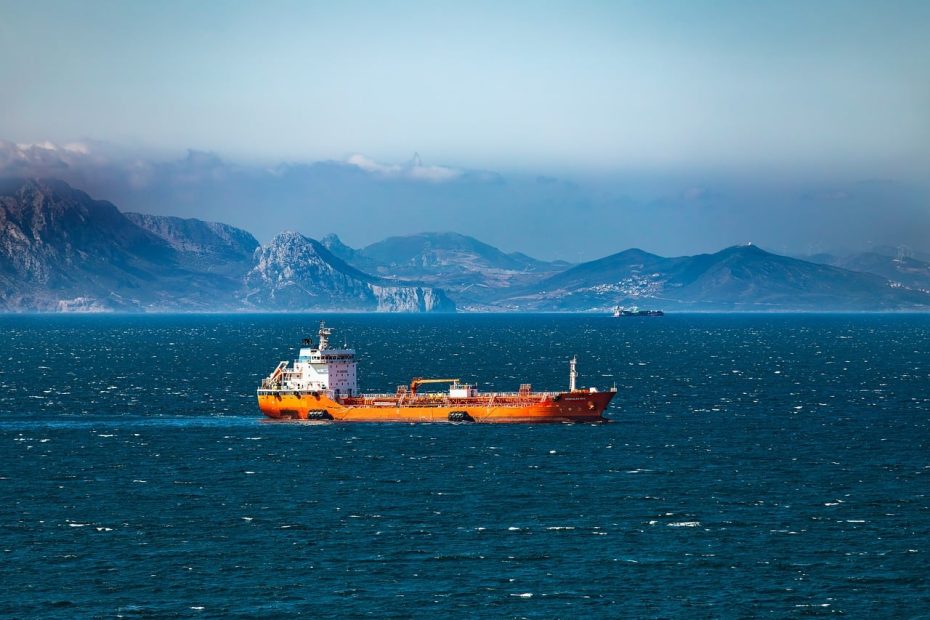
Oil became the world’s most important traded energy commodity because it could move efficiently by sea. Tankers connected producers and consumers across continents. Ports, terminals, loading arms, storage tanks, navigation channels, and maritime insurance became essential parts of the oil supply chain.
The tanker industry grew with global demand. Larger tankers reduced transport costs and allowed crude oil to move from the Middle East, West Africa, Latin America, and other producing regions to refineries in Europe, Asia, and North America. Very large crude carriers became symbols of the scale of petroleum trade.
Ports became strategic energy hubs. A major oil port could receive crude imports, load exports, store petroleum products, supply refineries, bunker ships, and connect to pipelines or rail systems. Some ports developed into integrated refining and petrochemical clusters, where crude oil could be processed and converted into fuels, plastics, chemicals, and industrial materials.
Shipping also introduced vulnerabilities. Maritime routes can be affected by war, piracy, sanctions, weather, canal restrictions, and chokepoint risk. A disruption in one waterway can affect prices far beyond the immediate region. This is why oil security is closely tied to naval power, port infrastructure, shipping insurance, and diplomatic relationships.
The global tanker system made oil more flexible than coal or pipeline gas. Crude oil could be redirected to different markets more easily than many other energy sources. That flexibility helped oil become the dominant fuel of global transport, but it also made oil markets highly sensitive to international events.
Petrochemicals and the Expansion Beyond Fuel
Oil’s importance extends beyond fuel. Petroleum and natural gas liquids became feedstocks for petrochemicals, which are used to make plastics, synthetic fibers, solvents, detergents, fertilizers, packaging, medical products, electronics, paints, adhesives, and countless industrial materials.
The rise of petrochemicals expanded the oil supply chain from energy into manufacturing. Refineries and chemical plants became increasingly connected. Naphtha, ethane, propane, butane, and other hydrocarbon streams could be processed into olefins, aromatics, polymers, and specialty chemicals. This created large industrial clusters in the United States, Europe, the Middle East, China, South Korea, Singapore, India, and other regions.
Petrochemicals also changed the long-term outlook for oil demand. Even as electric vehicles and fuel-efficiency policies put pressure on gasoline demand, petrochemical demand remains an important source of hydrocarbon consumption. Many oil-producing countries have invested in downstream petrochemical industries to capture more value from their resources rather than exporting only crude oil.
This downstream strategy can support industrial diversification. A country with oil or gas resources may build refineries, chemical plants, fertilizer plants, plastics manufacturing, and export terminals. The goal is to move from raw commodity exports toward higher-value products and industrial employment.
The petrochemical story shows why oil cannot be understood only as a transport fuel. Oil is embedded in the material economy. Its history includes cars and aircraft, but also packaging, clothing, construction materials, pharmaceuticals, agriculture, and consumer goods.
Oil Prices, Booms, Busts, and the Investment Cycle
Oil markets are known for price volatility. The industry requires large upfront investment, but supply and demand can change quickly. Exploration projects, offshore platforms, refineries, pipelines, and LNG-linked liquids infrastructure may take years to develop. Demand, however, can shift with recessions, wars, pandemics, technology, policy, or consumer behavior.
This creates boom-and-bust cycles. High prices encourage exploration, drilling, efficiency improvements, and alternative energy investment. Low prices can weaken producer revenues, delay projects, bankrupt smaller firms, and reduce government income in oil-exporting countries. Because oil is so central to trade and transport, price swings can affect inflation, currencies, fiscal budgets, and household costs.
The investment cycle is especially important in upstream oil. Producers must constantly replace reserves and offset decline from existing fields. Mature fields naturally lose production over time unless companies invest in enhanced recovery, infill drilling, pressure maintenance, or new discoveries. If investment falls too far, supply can tighten later.
Refining has its own cycle. A region may have enough crude supply but not enough refining capacity, or enough refining capacity but the wrong configuration for available crude. Refinery closures, fuel-quality rules, sanctions, shipping costs, and demand shifts can all create product shortages even when crude oil is available.
This is why oil supply-chain analysis matters. Prices are not shaped only by wells. They are shaped by spare production capacity, tanker availability, refinery margins, inventories, storage hubs, pipeline constraints, port access, sanctions, and consumer demand.
Shale Oil and the Return of North American Production
One of the most important oil developments of the twenty-first century was the rise of shale oil in the United States. Horizontal drilling and hydraulic fracturing unlocked large volumes of tight oil that had previously been difficult to produce economically. This changed global supply, trade flows, and market expectations.
Shale oil had a different supply-chain profile from many conventional megaprojects. Wells could often be drilled and brought online faster than offshore or large conventional projects. Production declined quickly, so companies needed continuous drilling to maintain output. This made shale more responsive to price changes, but also financially demanding.
The growth of U.S. shale reduced American crude import dependence, increased exports, supported pipeline and terminal expansion, and reshaped refinery economics. It also affected global producers by adding a major source of non-OPEC supply. Oil markets had to adjust to a world where U.S. production could grow rapidly under the right price and capital conditions.
Shale also exposed infrastructure bottlenecks. Production growth in inland basins required new pipelines, rail capacity, storage, processing, export terminals, and workforce support. At times, regional price discounts emerged because crude could not move easily from producing basins to refineries or ports.
The shale era reinforced an old lesson in a new form: oil production depends on the entire supply chain. Geology matters, but so do capital markets, drilling services, sand supply, water handling, pipelines, regulations, export docks, and refinery demand.
Oil in the Energy Transition
Oil now sits at the center of the energy transition debate. Many countries are trying to reduce greenhouse gas emissions, improve air quality, expand renewable electricity, electrify transport, and reduce dependence on imported fuels. These changes affect oil demand, investment strategy, refining, vehicle markets, and long-term producer planning.
Electric vehicles are one of the most important challenges to future gasoline demand. As battery costs, charging networks, and vehicle models improve, oil’s role in light-duty transport may weaken over time. Fuel-efficiency standards, public transit, biofuels, hybrid vehicles, and urban policy can also reduce gasoline consumption.
At the same time, oil remains difficult to replace in several sectors. Aviation, shipping, heavy trucking, mining, construction, agriculture, petrochemicals, military operations, and some industrial uses still depend heavily on petroleum products. The transition is not a simple replacement of one fuel with another. It is a sector-by-sector restructuring of demand.
Oil companies have responded in different ways. Some have invested in natural gas, petrochemicals, biofuels, carbon capture, hydrogen, electric charging, and renewable power. Others have focused on lower-cost oil production, shareholder returns, and disciplined capital spending. National oil companies often face a different challenge: they must manage long-term demand risk while still funding state budgets and domestic development.
The future of oil will likely be uneven. Some markets may see demand decline, while others continue to grow because of population, industrialization, freight demand, aviation, and petrochemicals. The history of oil is still being written through the tension between energy security, economic development, climate policy, and technological change.
Conclusion: Why the History of Oil Still Matters
The history of oil is the history of a commodity that became a system. Its power came from more than underground reserves. Oil reshaped the world because companies and governments built the supply chains needed to extract, refine, transport, store, trade, and consume it at massive scale.
From early kerosene markets to automobiles, aviation, petrochemicals, offshore platforms, supertankers, OPEC, shale production, and the energy transition, oil has repeatedly adapted to new technologies and new forms of demand. It has built fortunes, funded states, shaped wars, supported industrial growth, and exposed countries to price shocks and supply risk.
Oil remains central because it is deeply embedded in transport, logistics, manufacturing, chemicals, agriculture, defense, and trade. Even as the global energy system changes, the oil supply chain continues to influence inflation, infrastructure planning, geopolitics, and industrial strategy.
Understanding oil’s history is therefore essential to understanding modern energy. It explains why petroleum became so powerful, why replacing it is complex, and why the future of oil will depend not only on reserves, but on the infrastructure, policies, technologies, and markets that connect crude oil to the world economy.