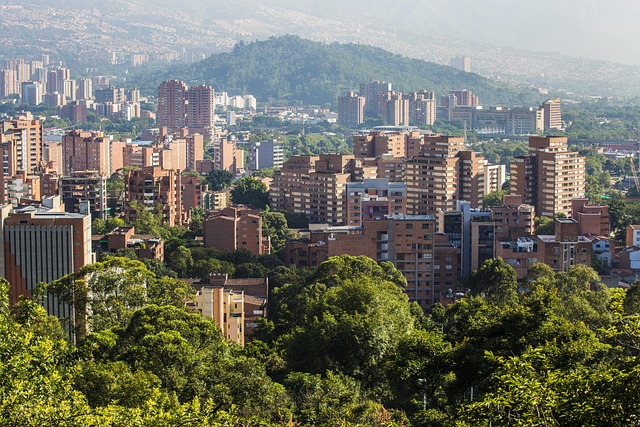
Colombia’s energy system is shaped by distance. Much of its electricity is generated in mountainous areas, large centers of demand sit across the Andean interior and Caribbean coast, and some of its strongest renewable resources are located far from the existing transmission network. The country has built a large interconnected electricity system, extensive oil and gas infrastructure, and important export terminals, but its next stage of energy development will depend on how quickly these assets can be expanded and modernized.
The central infrastructure issue is no longer only whether Colombia can build new power plants. It is whether the country can connect new generation, move electricity across difficult terrain, strengthen regional reliability, and extend modern energy services beyond the main grid.
The National Grid Connects a Geographically Divided Market
Colombia’s National Interconnected System supplies most of the country’s electricity demand and links the main population and industrial centers. At the highest voltage levels, the national transmission network includes 500 kV and 220–230 kV lines crossing the Andes and connecting regional systems that were once more isolated from one another.
The system contains more than 17,000 kilometers of transmission lines at these principal voltage levels. It also includes 500 kV substations that handle long-distance bulk power transfers and a much larger group of 220 kV substations serving regional networks. XM operates the interconnected system and coordinates generation, transmission, international exchanges, and the wholesale electricity market.
This structure has supported an electricity system with roughly 21 GW of effective generation capacity. Hydroelectric plants remain central, while thermal generation provides support when reservoir conditions are weak. Solar capacity has grown quickly, and wind development remains concentrated in the project pipeline rather than in the operating system.
Colombia’s geography makes transmission planning unusually important. Mountain ranges divide the main load centers, while landslides, flooding, drought, armed activity, and difficult access can affect construction and maintenance. A power project may be commercially attractive at its location but provide limited national value until the required substations and transmission corridors are completed.
La Guajira Has Resources That the Existing Network Cannot Fully Carry
La Guajira represents the clearest test of Colombia’s ability to align generation and infrastructure. The department has some of the country’s strongest wind resources and high solar potential, but it is located at the northeastern edge of the national network. Large renewable projects in the region need new transmission capacity to reach demand centers farther south and west.
The Colectora project is designed to connect approximately 1,050 MW from seven wind farms in La Guajira to the National Interconnected System. Its importance extends beyond a single transmission line. Colectora is intended to establish the first major route for bringing utility-scale wind generation from La Guajira into the wider Colombian market.
The project also shows why transmission development is not only an engineering exercise. Routes cross land used by Indigenous and rural communities, requiring consultation, agreements, environmental management, access planning, and local benefit arrangements. Delays in any of these areas can affect both the transmission asset and the generation projects waiting to use it.
Colombia is also planning a second phase of renewable transmission from La Guajira. The options studied by energy planners include a long high-voltage direct-current connection capable of moving much larger volumes toward the center of the country. HVDC technology could reduce losses over long distances and help control power flows, but such a project would require substantial investment, detailed environmental work, and coordination with the renewable capacity expected to connect.
The value of La Guajira’s wind and solar resources will therefore be determined partly by the pace of grid construction. Without transmission, renewable potential remains geographically trapped.
Modernization Must Accompany Physical Expansion
New lines alone will not resolve all of Colombia’s electricity infrastructure requirements. Parts of the existing system need stronger substations, new transformers, improved control equipment, additional circuits, storage, and technologies that increase the capacity of existing corridors.
UPME’s transmission modernization program identified 98 potential works across the national system. These include batteries, high-temperature conductors, flexible alternating-current transmission equipment, substation reconfiguration, and better use of existing infrastructure. Nineteen transmission works were approved during 2024 through the modernization and expansion process.
These projects respond to different problems. Some remove radial connections that leave local systems dependent on a single line. Others reduce congestion, reinforce fast-growing cities, provide backup during maintenance, or increase the ability of regional grids to accept new generation. Areas around Bogotá, Antioquia, Córdoba, Nariño, Tolima, and the Caribbean coast all have different network requirements.
Modernization is also becoming more digital. A system with greater solar and wind generation needs faster information, better forecasting, automated controls, and more flexible demand. Storage systems and demand-response programs could help the operator manage short-term changes without relying only on additional thermal generation.
The challenge is execution. Transmission projects normally require years of planning, licensing, land access, procurement, and construction. Generation projects can sometimes be developed faster, creating a mismatch between plants that are technically ready and networks that cannot yet receive their output.
Reliability Still Depends on Hydrology and Thermal Support
Colombia’s hydropower infrastructure gives the country a relatively low-carbon electricity system, but it also creates exposure to changing rainfall. Reservoirs provide storage and operating flexibility, yet prolonged dry periods can reduce available generation and increase the need for gas-, coal-, or liquid-fuel power plants.
This makes fuel infrastructure part of electricity reliability. Gas production facilities, pipelines, regasification capacity, and transport contracts influence whether thermal plants can operate when hydropower is restricted. The Caribbean regasification terminal near Cartagena has strengthened supply options for gas-fired generators on the northern coast, particularly during periods when domestic gas availability is tight.
The relationship between gas and electricity infrastructure may become more important as domestic gas supply changes. Colombia must decide how much new pipeline capacity, imported LNG access, storage, and fuel flexibility it needs to support industry and power generation. A poorly supplied thermal fleet cannot provide dependable backup simply because its generating capacity exists on paper.
Oil infrastructure remains commercially important as well. Production fields are connected to inland transport systems, refineries, and Caribbean and Pacific export routes. The Barrancabermeja and Cartagena refining complexes are major national assets, while ports support crude oil, refined products, coal, and emerging energy cargoes.
The Main Grid Does Not Describe the Entire Country
Large parts of Colombia are difficult to serve through conventional grid expansion. Communities in the Amazon, Pacific, Orinoco, and other remote areas may depend on local diesel generation, small isolated systems, or limited daily service. These regions are classified separately from the National Interconnected System because extending long transmission lines may be technically difficult and economically expensive.
Distributed solar, batteries, small hydro, biomass, and hybrid systems offer alternatives to diesel dependence. Their success, however, requires more than equipment installation. Projects need maintenance capacity, replacement parts, trained local operators, reliable payment systems, and productive uses that support long-term demand.
Energy-community policies are creating a larger role for decentralized generation and local participation. This approach could improve access while avoiding infrastructure designed without sufficient knowledge of local conditions. The strongest projects will combine technology with governance, training, and durable operating models.
Ports and New Energy Networks Could Expand Colombia’s Regional Role
Colombia’s Caribbean ports could eventually support offshore wind construction, hydrogen production, and exports of hydrogen derivatives. Studies are examining whether existing port infrastructure can handle large offshore components and serve future low-carbon industrial projects.
These possibilities remain less mature than the electricity and hydrocarbon networks already in operation. Green hydrogen would require renewable electricity, water systems, electrolyzers, storage, pipelines, conversion facilities, and export terminals. Offshore wind would require specialized vessels, assembly areas, subsea cables, and new onshore connections.
The country therefore has an opportunity to plan these systems together rather than as isolated projects. Ports, transmission, industrial demand, and hydrogen infrastructure could reinforce one another if projects reach commercial scale. Poor coordination would create expensive assets that operate below capacity.
Infrastructure Delivery Will Define Colombia’s Energy Transition
Colombia has substantial generation resources and a broad national energy network, but infrastructure delivery is becoming the main limit on expansion. The country must connect La Guajira, reinforce congested regional systems, modernize substations, maintain thermal fuel security, and improve service in remote areas.
The decisive measure will not be the number of projects announced. It will be the number that complete consultation, financing, licensing, procurement, and construction. Colombia’s energy transition will advance only as quickly as its networks can move energy from the places where it is available to the places where it is needed.