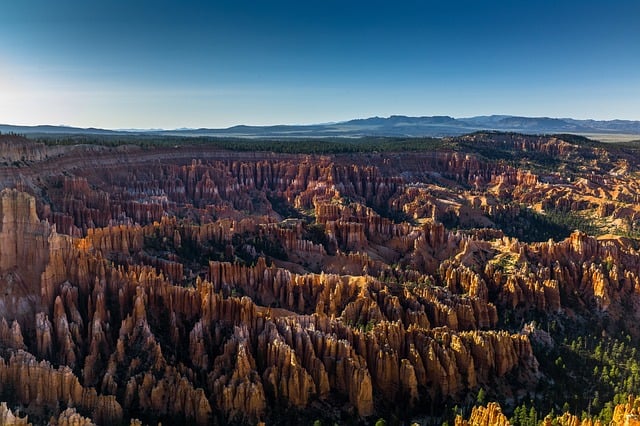
There is no single United States renewable energy market. The country contains several large electricity systems, fifty state policy environments, different utility structures and almost every commercially important renewable resource.
Wind dominates parts of the Great Plains and Texas. Solar is expanding quickly across the Southwest, California, Texas and several eastern states. Hydropower remains central to electricity supply in the Pacific Northwest. Geothermal generation is concentrated in western states, while biomass and biofuels connect renewable energy with agriculture, forestry and transport.
Together, renewable resources supplied about 24% of US utility-scale electricity generation in 2025. Wind remained the largest renewable source, but solar recorded the fastest growth. The national transition is therefore not a movement toward one dominant technology. It is a regional expansion shaped by local resources, electricity demand, transmission access, state rules and federal tax policy.
Solar Has Become the Main Source of New Power Capacity
Utility-scale solar is now the leading source of new generating capacity in the United States. Developers added approximately 27.2 gigawatts in 2025 and reported plans for another 43.4 gigawatts in 2026. If completed, that would make 2026 one of the strongest years for solar construction in US history.
Solar’s growth reflects more than environmental policy. Projects can be built relatively quickly, their operating costs are low, and they can serve rapidly expanding electricity demand from data centres, manufacturing, air conditioning and population growth. Utility-scale solar generation rose by 34% in 2025 to approximately 296,000 gigawatt-hours.
Texas has become the centre of this expansion. It surpassed California in utility-scale solar capacity and is expected to account for about 40% of planned national additions in 2026. The state combines strong solar resources, available land, a competitive wholesale electricity market and rapidly increasing power demand.
Solar is also expanding in Arizona, Nevada, Florida, Michigan, Virginia and other markets with very different climates and regulatory structures. This geographic spread makes the technology less dependent on policy in any one state.
Small-scale solar forms a second market. Rooftop and commercial systems generated approximately 93,000 gigawatt-hours in 2025. They allow households, businesses, schools and public agencies to produce electricity near the point of use. However, residential growth may slow after the federal residential clean-energy credit ended for expenditures after 2025.
Wind Power Has Scale but Faces a Slower Development Cycle
The United States has more than 150 gigawatts of installed wind capacity across more than forty states and Puerto Rico. Wind produced approximately 464,000 gigawatt-hours in 2025, equivalent to about 11% of utility-scale US electricity generation.
The strongest land-based resources stretch through the centre of the country, including Texas, Iowa, Oklahoma, Kansas, the Dakotas and nearby states. Large projects in these regions can produce electricity at competitive prices, while landowners receive lease payments and local governments collect tax revenue.
Wind development is nevertheless growing more slowly than solar. Large turbines require specialised components, heavy transport, suitable transmission access and long project timelines. Local restrictions, wildlife considerations and opposition to new transmission lines can delay construction even in states with excellent resources.
Offshore wind offers a different opportunity. The Atlantic coast has strong resources close to major demand centres, particularly from New England through the Mid-Atlantic. Projects have advanced in waters near Rhode Island, Massachusetts, New York, New Jersey and Virginia, but the industry has faced rising costs, supply-chain limitations, permitting disputes and federal policy uncertainty.
The technical offshore resource is very large, yet commercial development remains far behind the mature industries of the United Kingdom and northern Europe. Near-term US renewable growth will therefore continue to depend more heavily on land-based wind and solar.
Texas and California Show Two Different Renewable Models
Texas demonstrates how renewable energy can grow within a market driven by competition, land availability and electricity demand. Wind established the state as a national renewable leader, while solar and battery storage are now expanding more quickly.
From January through September 2025, electricity demand in the main Texas grid increased by 5% compared with the same period in 2024. Wind and solar supplied much of the additional generation. Utility-scale solar output in the Texas market is expected to rise from 56 billion kilowatt-hours in 2025 to 106 billion by 2027, while battery capacity could increase from about 15 to 37 gigawatts.
California represents a more policy-directed system. The state has built extensive solar capacity through renewable standards, incentives, utility procurement and rooftop adoption. Its challenge is increasingly what to do with abundant midday electricity.
California’s grid operator curtailed 3.4 million megawatt-hours of wind and solar generation in 2024 because production sometimes exceeded demand or transmission capacity. Battery storage is reducing this loss by absorbing solar power during the day and delivering it after sunset. By April 2026, battery capacity in the California Independent System Operator area had reached approximately 16 gigawatts.
These states show why capacity alone is not a complete measure of renewable progress. Texas must add supply quickly enough to serve exceptional demand growth. California must integrate a mature solar fleet without wasting increasing amounts of available generation.
Hydropower, Geothermal and Biomass Add Regional Stability
Wind and solar receive the most investment attention, but older renewable resources remain important. Conventional hydropower produced about 6% of US utility-scale electricity in 2025 and nearly one-quarter of renewable utility-scale generation.
Hydropower is especially important in Washington, Oregon, Idaho and Montana, where the Columbia River system supports large federal and public power assets. It provides dispatchable electricity and system flexibility that variable wind and solar projects cannot provide by themselves. Its output can still change significantly with rainfall, snowpack, drought and environmental operating requirements.
Geothermal power accounts for less than 1% of national generation but provides steady output in states such as California, Nevada and Utah. Enhanced geothermal technologies could expand the range of locations where underground heat can be used commercially, although drilling cost and geological risk remain barriers.
Biomass, landfill gas and waste-derived generation make smaller contributions to electricity supply. Their role is often local, serving forestry regions, agricultural processors, municipal waste systems or industrial sites. Biofuels are more important in transport, particularly through ethanol production linked to the Midwest corn economy and renewable diesel markets connected to agricultural oils and waste feedstocks.
Transmission Is the Central National Constraint
The best US wind and solar resources are often located far from the largest cities. Wind from the Great Plains must reach demand centres farther east or south, while large solar projects require connections to regional transmission systems that may already be congested.
Many proposed projects spend years in interconnection queues while grid operators study their effects and determine the cost of required upgrades. Developers may then withdraw when network costs make a project uneconomic, forcing operators to repeat studies for the remaining projects.
Federal Energy Regulatory Commission reforms are intended to improve both generator interconnection and long-term transmission planning. Order No. 1920 requires regional providers to examine needs over a twenty-year period and gives states a larger role in planning and cost allocation.
Implementation will remain difficult because the United States does not have one national grid authority. Utilities, regional transmission organisations, state regulators, federal agencies, landowners and local governments all influence major projects. A transmission line may benefit several states while crossing communities that receive few direct advantages.
Storage and grid-enhancing technology can provide partial solutions. Batteries can move solar output into evening hours, while advanced conductors and dynamic line ratings can increase the amount of electricity carried by existing routes. They do not remove the need for major new transmission corridors.
Federal Tax Changes Create a Near-Term Construction Window
Federal tax incentives have been one of the strongest financial drivers of US renewable development. The technology-neutral Clean Electricity Production Credit and Clean Electricity Investment Credit replaced older incentives for qualifying low-emission projects.
Legislation enacted in 2025 shortened the available period for wind and solar. Under current rules, credits generally terminate for applicable wind and solar facilities placed in service after 2027 when construction begins after July 4, 2026. New restrictions also apply to material assistance from prohibited foreign entities.
This creates pressure to begin eligible projects quickly, but it may weaken the investment pipeline later in the decade. State renewable standards, corporate power contracts, utility demand and the underlying cost of solar, wind and storage will become more important if federal support declines.
The market will not stop developing uniformly. States with fast electricity-demand growth, favourable resources and supportive regulations may continue building at scale. Other markets may delay projects where tax changes combine with transmission limits, high financing costs or local opposition.
Renewable Growth Must Now Keep Pace With Electricity Demand
The United States is entering a period of renewed electricity consumption growth after more than a decade of relatively flat demand. Data centres, semiconductor plants, battery factories, electrification and population growth are increasing requirements in markets such as Texas and Virginia.
Renewables can supply a large share of this growth, particularly because solar projects can be completed faster than many conventional power plants. However, dependable electricity systems will also require storage, transmission, flexible demand, hydropower, nuclear generation and dispatchable capacity.
The scale of the US market gives renewable energy strong commercial momentum, but its fragmented structure will continue to produce uneven results. Solar is positioned for the fastest near-term expansion, wind remains the largest renewable electricity source, and batteries are becoming essential to both. The next phase will be determined less by resource availability than by grid access, regional demand and the durability of investment policy.