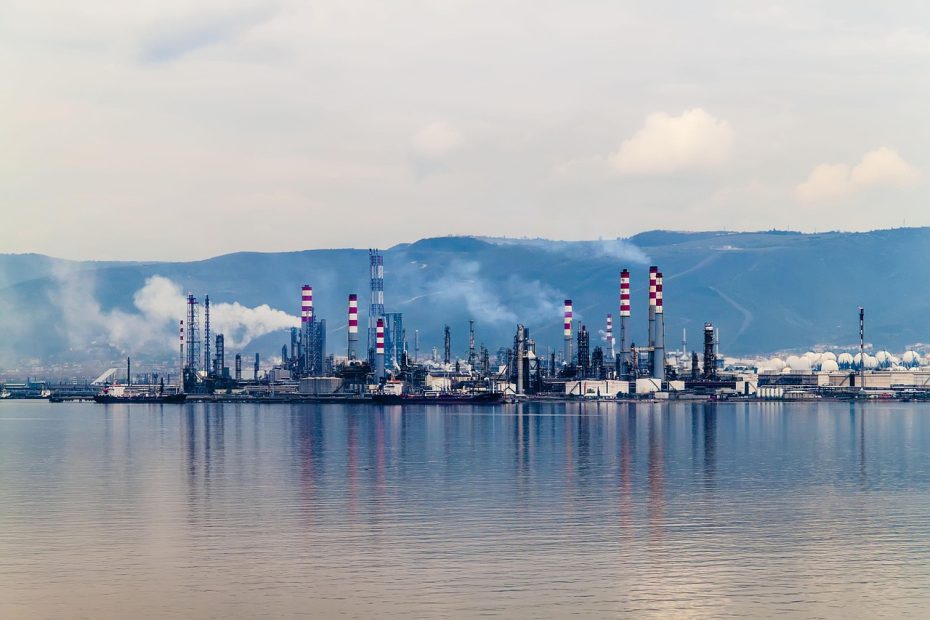
Natural gas began as a local fuel. For most of its history, it could only be used near the place where it escaped from the ground or came up with oil. It was difficult to store, hard to move across long distances, and less visible than coal or oil because it had no simple global shipping system for most of the industrial age. That changed as pipelines, compressors, gas processing plants, underground storage, liquefied natural gas terminals, and gas-fired power plants turned natural gas into one of the world’s major energy sources.
The story of natural gas is also a story about infrastructure. Coal could be mined, stacked, loaded onto railcars, and shipped by sea. Oil could be stored in tanks, refined into liquid fuels, and moved through tankers, trucks, pipelines, and barrels. Natural gas needed a different supply chain. It required pressure, containment, treatment, metering, and continuous delivery. A gas market could not grow without pipes, valves, compressors, storage fields, distribution networks, and large anchor customers.
That is why natural gas developed later than coal and oil as a global energy commodity. Its value was always clear. It burned with less smoke than coal, produced strong heat, and could serve homes, factories, power plants, chemical facilities, and industrial boilers. The problem was not whether gas was useful. The problem was how to capture it, clean it, move it, store it, sell it, and regulate it safely.
The history of natural gas moves through several major stages: early local use, manufactured town gas, the rise of drilled gas wells, the pipeline age, the postwar expansion of national gas grids, the emergence of LNG, the shale revolution, and the modern debate over gas in the energy transition.
Early Natural Gas: Seeps, Flames, and Local Use
Long before natural gas became an industry, it appeared as a geological curiosity. Gas escaped naturally from underground formations through cracks, springs, and seeps. In some places, it ignited and created long-burning flames. These natural flames became part of local landscapes, religious sites, and early observations of the earth’s hidden energy.
One of the most important early uses came from ancient China, where gas associated with salt brine production was captured and moved through simple bamboo pipelines. The gas was used to heat brine and help produce salt. This was not a modern gas industry, but it showed the basic supply-chain logic that still defines natural gas: capture the gas, move it through a controlled pathway, and burn it at the point of use.
For centuries, however, natural gas remained geographically trapped. A seep could support a local flame, a small salt operation, or a limited heating use, but it could not support a large city, factory district, or national energy system. Without reliable pipes and pressure control, gas was a local accident rather than a scalable commodity.
This made natural gas different from other early fuels. Wood, charcoal, and coal could be carried. Later, oil could be collected and transported in liquid form. Natural gas disappeared into the air unless it was contained. Its early history was therefore less about discovery and more about confinement. The resource existed, but the technology and infrastructure to use it at scale did not.
Manufactured Gas Before Natural Gas
The first large urban gas systems were not built around natural gas. They were built around manufactured gas, often called town gas or coal gas. This gas was produced by heating coal in gasworks and distributing the resulting fuel through local pipe networks for lighting, cooking, and heating.
Manufactured gas was critical because it created the first gas utility model. Cities learned how to build gas mains, meter customers, manage street lighting, maintain distribution networks, and regulate urban gas service. These systems were not natural gas systems in the modern sense, but they created the commercial and technical template that natural gas would later inherit.
In the 19th century, gas lighting became a major feature of urban modernization. Streets, factories, public buildings, theaters, shops, and homes could be lit more reliably than with candles or oil lamps. Gas utilities became part of the urban economy. They needed coal supply, gasworks, storage holders, pipe networks, service crews, billing systems, and municipal agreements.
Natural gas began competing with this system only where it was available close to demand. In places with nearby gas wells, natural gas offered a cleaner and often cheaper alternative to manufactured gas. But in most cities, natural gas was not close enough. Without long-distance pipelines, a natural gas field far from a city had little commercial value.
This period matters because it shows that the market for gas existed before the supply chain for natural gas was mature. Customers already wanted gaseous fuel. Cities already had pipe networks. Industry already understood the value of controllable heat. Natural gas did not have to invent demand from scratch. It had to overcome distance.
The First Drilled Gas Wells and Local Distribution
The modern natural gas industry began to take shape in the 19th century as wells were drilled specifically to capture gas rather than simply observe natural seeps. In the United States, the early gas industry is often associated with Fredonia, New York, where William Hart drilled a shallow well in the early 1820s to obtain natural gas from a known seep. The gas was carried through primitive piping and used locally.
These early systems were small, but they introduced several principles that would define the industry. A gas well needed to be connected to customers. Pipes had to be strong enough to contain pressure. Leaks had to be managed. The customer base had to be close enough to the well to make distribution practical. Natural gas was not sold as a standalone object. It was sold as a delivered service.
During the 19th century, natural gas also appeared alongside oil. As oil exploration expanded, producers often encountered associated gas, meaning gas found with crude oil. In many cases, this gas was treated as a nuisance because it was difficult to transport and had little market if no pipeline existed nearby. Some was flared. Some was used at the field. Some supported nearby towns or industries. Much of it remained stranded.
The industrial value of natural gas became clearer when factories, ironworks, glassmakers, brickmakers, and later steel producers saw that gas could provide intense, controllable heat. Cities near gas fields could use it for lighting and heating. Industrial users valued it because it burned cleaner than coal and could be directed through burners with more precision.
But the same constraint remained: distance. Early gas markets were built close to production. The supply chain was short, local, and fragile.
Burners, Meters, and the Shift from Lighting to Heat
Natural gas gained new importance as technology improved the way gas was burned and controlled. Burners that mixed gas with air made combustion cleaner, hotter, and easier to manage. The Bunsen burner, developed in the 1850s, became an important symbol of controlled gas combustion. It was designed for laboratory use, but the broader idea mattered across the energy system: gas could be mixed, regulated, and burned with precision.
This helped natural gas move beyond lighting. In the late 19th century, electricity began replacing gas as the preferred source for urban lighting. That could have weakened the gas business permanently. Instead, gas suppliers shifted toward heating, cooking, industrial processes, and later water heating. The market changed from illumination to thermal energy.
This transition was crucial. Lighting demand was limited by hours of darkness and vulnerable to electric competition. Heating and cooking demand were deeper, more regular, and tied to daily life. Industrial heat could create large-volume customers. Gas utilities began to focus on appliances, burners, furnaces, boilers, stoves, and building connections.
This was also the period when measurement and billing became more important. A gas industry cannot function without meters. Customers needed to be charged based on use. Utilities needed to understand pressure, volume, leaks, and demand patterns. The gas meter became as important to the commercial supply chain as the pipe itself.
By the early 20th century, natural gas had a clearer identity. It was not only a lighting fuel. It was a heating fuel, an industrial fuel, and eventually a power-sector fuel.
The Pipeline Age
Natural gas became a major energy source when pipelines improved. The development of stronger steel pipe, better joints, welding, compressors, valves, and pressure-management systems allowed gas to move farther from the field to the city. This changed the entire economics of the resource.
A pipeline turns natural gas from a local fuel into a regional commodity. It connects producers with distant customers. It allows fields to be developed even when the nearest demand center is far away. It gives utilities the confidence to sign long-term supply contracts. It also creates a large capital system: rights-of-way, compressor stations, control centers, metering points, storage connections, and maintenance operations.
The early long-distance pipeline era was not only a technical achievement. It was a commercial and regulatory transformation. Pipelines required large upfront investment and long-term commitments. Producers needed buyers. Utilities needed reliable supply. Governments needed safety rules and rate structures. Landowners had to grant access. Cities had to plan distribution networks around incoming gas supply.
Once long-distance pipelines became viable, natural gas began to compete more directly with coal and oil in urban heating, industrial boilers, and power generation. It could reach cities that had no nearby gas fields. It could support larger distribution networks. It could become part of national energy planning.
The supply chain now had several linked segments. Upstream producers drilled wells. Gathering systems moved raw gas from wells to processing facilities. Processing plants removed water, carbon dioxide, sulfur compounds, and natural gas liquids where needed. Transmission pipelines carried dry gas over long distances. Storage facilities balanced seasonal demand. Local distribution companies delivered gas to homes and businesses.
This chain made natural gas reliable enough for modern energy markets.
Gas Processing and the Hidden Middle of the Supply Chain
Natural gas is often described as methane, but raw gas is rarely pure methane. It can include water vapor, carbon dioxide, hydrogen sulfide, nitrogen, helium, propane, butane, ethane, condensates, and other hydrocarbons. Before it enters long-distance pipelines, it often must be treated and processed.
Gas processing became a major part of the industry because pipelines and customers require gas to meet quality standards. Water can cause corrosion or hydrate formation. Sulfur compounds can be dangerous and corrosive. Natural gas liquids can be valuable, but they must be separated and handled properly. Carbon dioxide can reduce heating value and affect pipeline specifications.
This created a midstream industry between the wellhead and the final customer. Processing plants, dehydration units, separators, fractionators, compressors, and metering stations became essential. Natural gas liquids developed their own supply chain, feeding petrochemical plants, heating markets, blending systems, and export terminals.
The processing stage also changed the economics of gas production. A field with rich gas, meaning gas that contains valuable liquids, may be more profitable than a dry-gas field even if methane prices are weak. A sour-gas field may require expensive treatment before it can be commercialized. A remote field may remain undeveloped if processing and pipeline access are missing.
In this way, the history of natural gas is not only the history of wells and pipelines. It is also the history of making gas marketable. The raw resource has to be converted into a product that can move safely through a standardized network.
Storage and the Problem of Seasonal Demand
Natural gas demand is uneven. In many countries, consumption rises sharply in winter because of heating. In others, demand rises during hot periods when gas-fired power plants help meet air-conditioning load. Industrial demand may be steadier, but residential and power-sector demand can move heavily with weather.
This made storage a central part of the gas supply chain. Without storage, pipelines would have to be sized only for peak demand, which would make the system more expensive and less flexible. Underground storage allows gas to be injected when demand is lower and withdrawn when demand is higher.
Depleted gas fields, aquifers, and salt caverns became important storage assets. Depleted fields are useful because they already held gas geologically. Salt caverns can provide faster withdrawal rates, making them valuable for short-term balancing. Storage sites help stabilize markets, support reliability, and protect customers during cold snaps or supply disruptions.
Storage also changed the commercial behavior of the gas industry. Gas could be bought, injected, withdrawn, hedged, and managed across seasons. Utilities and traders had to think about inventories, deliverability, price spreads, pipeline constraints, and weather risk.
This is one of the defining differences between natural gas and electricity. Electricity must be balanced instantly, while gas can be stored in large underground reservoirs. But gas is harder to move than liquid fuels and more dependent on fixed infrastructure. Storage became the bridge between continuous production and uneven consumption.
Postwar Expansion and the Rise of National Gas Grids
After World War II, natural gas expanded rapidly in many industrial economies. Larger pipelines connected producing regions with major cities and industrial centers. Gas became more important for home heating, factories, power plants, and chemical production. Governments and utilities began to treat gas as a strategic part of national energy systems.
In North America, large pipeline systems connected producing basins to population centers. In Europe, gas development accelerated with major discoveries such as the Groningen field in the Netherlands and later North Sea production. The Soviet Union built enormous gas infrastructure to move Siberian gas across long distances, eventually making pipeline gas a major part of European energy trade. In North Africa and the Middle East, gas moved from being secondary to oil into a strategic export and industrial resource.
The postwar era also brought the rise of petrochemicals. Natural gas and gas liquids became feedstocks for ammonia, fertilizer, methanol, plastics, and other chemical products. Gas was no longer only a fuel. It became an industrial input.
This changed the way countries viewed gas reserves. A gas field could support electricity generation, urban heating, fertilizer production, export revenue, industrial parks, or petrochemical complexes. Countries with large gas resources could use them to build domestic industry. Countries without gas resources had to decide whether to import pipeline gas, build LNG terminals, rely on coal and oil, or develop other energy sources.
By the late 20th century, natural gas had become a core pillar of modern energy planning.
LNG and the Globalization of Natural Gas
Liquefied natural gas changed the geography of gas. Pipelines work well across land and shorter sea crossings, but they cannot economically connect every producer and consumer. LNG solved part of that problem by cooling natural gas to a liquid state, reducing its volume dramatically and allowing it to be shipped in specialized tankers.
The LNG supply chain is complex. Gas must be produced and processed, then sent to a liquefaction plant. The plant cools the gas to extremely low temperatures, turning it into a liquid. LNG is stored in insulated tanks, loaded onto carriers, shipped across oceans, unloaded at import terminals, stored again, regasified, and sent into pipelines for delivery to power plants, utilities, and industrial customers.
This made natural gas a seaborne commodity. It allowed gas-rich countries without pipeline access to reach distant markets. It also allowed import-dependent countries to diversify supply beyond neighboring pipeline systems.
The early LNG trade grew slowly because it required expensive infrastructure and long-term contracts. Japan, South Korea, and later Taiwan became major LNG importers because they had limited domestic fuel resources and strong demand for reliable power generation. LNG exporters such as Algeria, Indonesia, Malaysia, Qatar, Australia, and later the United States helped build a global market.
LNG also changed energy security. Pipeline gas can be efficient and stable, but it ties buyers and sellers together geographically. LNG gives buyers more optionality, but it also exposes them to global price competition, shipping constraints, and terminal capacity limits. In the modern gas market, LNG is the flexible link between regional pipeline systems.
Natural Gas and Electric Power
Natural gas became especially important in electricity generation because gas turbines and combined-cycle plants can convert gas into power efficiently and flexibly. Gas-fired plants can often be built faster than coal or nuclear plants, require less land than many large generation projects, and ramp output more easily than traditional baseload power stations.
The rise of combined-cycle gas turbine technology gave natural gas a stronger role in power systems. These plants use both a gas turbine and a steam cycle, improving efficiency by capturing waste heat. For utilities, they offered a useful combination of lower capital cost, operational flexibility, and lower local air pollution than coal plants.
This helped natural gas expand in countries seeking to reduce coal use, meet rising electricity demand, or balance variable renewable generation. Gas plants can support grids when wind and solar output changes, making them attractive in systems with growing renewable capacity.
But the power-sector role of gas also created new dependencies. A country that relies heavily on gas-fired electricity must secure fuel supply, pipeline capacity, storage, and import infrastructure. Gas price spikes can quickly become power price spikes. Supply disruptions can affect grid reliability. The electricity system and the gas system became increasingly linked.
This connection is now one of the central issues in modern energy planning. Natural gas is not only a fuel delivered to homes and factories. It is a balancing fuel for power grids, a backup source during peak demand, and a key variable in electricity prices.
The Shale Revolution and Unconventional Gas
The shale revolution changed the history of natural gas by unlocking large volumes of gas from tight rock formations. Hydraulic fracturing and horizontal drilling made it possible to produce gas from resources that were previously considered too difficult or too expensive to develop at scale.
This was especially important in the United States. Shale gas production grew quickly after the mid-2000s, reshaping domestic energy markets. Gas supply increased, prices fell for long periods, coal lost ground in electricity generation, petrochemical investment expanded, and LNG import terminals were reworked into export terminals.
The shale model was not just a drilling breakthrough. It was a supply-chain breakthrough. It depended on seismic imaging, horizontal wells, hydraulic fracturing fleets, sand logistics, water management, gathering pipelines, processing plants, takeaway pipelines, storage, and access to large demand centers. It also depended on a service industry capable of drilling many wells quickly and repeatedly.
Unconventional gas changed the global market even where shale production did not expand in the same way. U.S. LNG exports added new flexible supply to global trade. Gas buyers gained another major source of supply. Traditional exporters faced new competition. European and Asian markets became more connected through LNG pricing and cargo flows.
The shale revolution also sharpened environmental debates around methane emissions, water use, land disturbance, and the long-term role of fossil gas. It expanded supply, but it also raised new questions about how gas should fit into climate policy.
Natural Gas in Industry and Petrochemicals
Natural gas is a major industrial fuel and feedstock. It provides heat for factories, refineries, cement plants, glass production, food processing, paper mills, and metalworking. It also supports chemical production, especially through methane and natural gas liquids.
One of the most important uses is ammonia production. Natural gas is commonly used to produce hydrogen, which is then combined with nitrogen to make ammonia for fertilizer. This links gas directly to agriculture and food systems. When gas prices rise sharply, fertilizer costs can rise as well, affecting farmers and food supply chains.
Methanol is another important gas-based product. Ethane, propane, and butane separated from natural gas streams can feed petrochemical plants that produce plastics and other materials. In gas-rich countries, petrochemicals can become a way to convert natural gas into higher-value exports.
This industrial role gives natural gas a different profile from fuels used mainly for transport. Oil dominates mobility because it can be refined into gasoline, diesel, jet fuel, and marine fuels. Natural gas is more deeply tied to fixed assets: power plants, factories, fertilizer facilities, heating networks, LNG terminals, and pipelines.
The industrial supply chain also explains why gas demand can be difficult to replace quickly. A household furnace, a power plant, a fertilizer facility, or a petrochemical complex is built around specific fuel systems. Changing that fuel requires capital investment, new infrastructure, and often new technology.
Energy Security and the Politics of Gas
Natural gas has always been political because it depends on infrastructure that crosses borders, regions, and coastlines. Pipelines create long-term relationships between suppliers, transit countries, and consumers. LNG creates global competition for cargoes. Storage levels, winter weather, shipping routes, sanctions, contracts, and geopolitical conflict can all affect supply and price.
Pipeline gas can provide stable long-term supply, but it can also create dependence. A buyer connected to one dominant supplier may face strategic risk. A supplier dependent on one export route may face transit risk. A transit country may gain leverage from geography. These relationships have shaped energy politics across Europe, Eurasia, North Africa, the Middle East, and parts of Asia.
LNG has reduced some of these constraints by allowing buyers to diversify sources. A country with regasification terminals can import from multiple exporters, assuming it can afford the cargoes and secure shipping. But LNG does not eliminate risk. It shifts risk into global markets, where buyers compete during tight supply periods.
Storage is also a security asset. Countries with strong storage systems can manage seasonal swings and supply interruptions better than countries that rely only on real-time imports. Pipeline interconnections, reverse-flow capability, floating storage and regasification units, and diversified contracts all became part of modern gas security planning.
The history of natural gas is therefore not only industrial. It is strategic. Control over gas infrastructure can influence national security, foreign policy, industrial competitiveness, and household energy costs.
Natural Gas and the Energy Transition
Natural gas occupies a complicated place in the energy transition. It burns with lower carbon dioxide emissions than coal when used for power generation, and gas plants can help balance electricity systems with growing wind and solar output. This has made gas attractive to countries trying to reduce coal use while maintaining reliable electricity.
At the same time, natural gas remains a fossil fuel. Its main component is methane, and methane emissions from production, processing, transmission, storage, distribution, and end use are a major climate concern. The climate value of switching from coal to gas depends heavily on controlling methane leaks and avoiding long-term infrastructure lock-in.
This has created different strategies in different countries. Some see natural gas as a transition fuel that supports coal reduction, industrial development, and grid reliability. Others see new gas infrastructure as a risk because pipelines, LNG terminals, and gas plants are long-lived assets. Some gas-rich countries are investing in carbon capture, blue hydrogen, methane monitoring, and lower-emissions production. Importing countries are weighing gas security against electrification, renewables, nuclear power, and storage.
The future of natural gas will not be the same everywhere. In some markets, gas may grow because electricity demand, industrialization, and LNG access are expanding. In others, gas may decline as buildings electrify, renewables expand, and climate policy tightens. The supply chain built over two centuries will remain important, but its role will vary sharply by region.
The Modern Natural Gas Supply Chain
The modern natural gas supply chain begins with exploration and production. Companies identify gas-bearing formations, drill wells, complete them, and bring gas to the surface. Some gas comes from dedicated gas wells. Some comes as associated gas from oil production. Some comes from offshore fields, shale formations, tight sands, coalbeds, or conventional reservoirs.
From the wellhead, gas enters gathering systems. These smaller pipelines move raw gas to processing sites. At processing plants, impurities are removed, water is separated, and valuable liquids may be extracted. The gas is then compressed and moved into high-pressure transmission pipelines.
Transmission pipelines carry gas across long distances to markets, storage facilities, power plants, industrial users, LNG terminals, and local distribution networks. Compressor stations keep gas moving. Control centers monitor pressure, flow, quality, and system integrity.
Storage sites balance supply and demand. Local distribution companies reduce pressure and deliver gas through smaller pipelines to homes, commercial buildings, and smaller industrial users. Large customers such as power plants and factories may connect directly to transmission systems.
The LNG chain adds liquefaction plants, cryogenic storage tanks, LNG carriers, import terminals, regasification systems, and marine logistics. This turns pipeline gas into a globally traded commodity, but it also adds capital cost and technical complexity.
Every segment matters. A gas field without processing cannot serve pipeline markets. A processing plant without takeaway capacity can become stranded. A pipeline without storage may struggle with seasonal demand. An LNG terminal without downstream pipeline capacity may sit underused. Natural gas is valuable only when the chain holds together.
Conclusion: Why the History of Natural Gas Matters
The history of natural gas is the history of an energy source that had to wait for its infrastructure. The resource was known for centuries, but it could not become a major fuel until engineers, utilities, producers, and governments built systems to capture it, process it, transport it, store it, and deliver it safely.
Natural gas moved from ancient seeps to local lighting networks, from town gas competition to long-distance pipelines, from industrial heat to power generation, from regional supply contracts to global LNG trade. Each stage added another layer to the supply chain.
Its modern role is built on that history. Natural gas is a household fuel, an industrial input, a power-sector fuel, a petrochemical feedstock, an LNG commodity, and an energy-security asset. Its future will depend on demand growth, methane control, climate policy, infrastructure investment, and competition from renewables, nuclear power, storage, and electrification.
Natural gas became important because it solved real energy problems. Its next chapter will depend on whether the systems built around it can adapt to a changing global energy economy.