Coal became one of the most important fuels in world history because it solved a basic energy problem: how to create large amounts of heat, power, and mechanical force without depending only on wood, wind, water, or human and animal labor. Long before oil, natural gas, nuclear power, or modern renewables became central to the global energy system, coal supplied the dense, transportable fuel that allowed cities, factories, railways, ships, power plants, and steel mills to expand.
The history of coal is not only the history of a fuel. It is the history of a supply chain. Coal had to be found, mined, moved, sorted, sold, burned, and integrated into industrial systems. Its rise depended on geology, labor, engineering, rail transport, ports, finance, heavy industry, and state policy. Its influence reached into almost every part of the modern economy, from electricity and manufacturing to urban heating, military logistics, shipping, and construction.
Coal also changed the geography of economic power. Regions with large coal deposits gained industrial advantages. Britain, Germany, the United States, Russia, China, India, Australia, South Africa, and parts of Eastern Europe all built major industries around coal resources. In many countries, coal was not simply another commodity. It was the foundation of national development, industrial employment, power generation, and energy security.
Today, coal sits in a more contested position. It remains important for electricity generation, steelmaking, cement production, and industrial heat, especially in Asia and other fast-growing markets. At the same time, coal faces pressure from air pollution concerns, carbon emissions policy, aging power plants, mine closures, and competition from natural gas, nuclear power, hydropower, solar, wind, and battery storage. Understanding coal’s history helps explain why it became so powerful, why it remains embedded in many economies, and why changing the coal supply chain is more complicated than replacing one fuel with another.
Early Coal Use Before the Industrial Age
Coal was used long before the industrial revolution, but its early role was limited by mining technology, transport costs, and the availability of easier fuels. In ancient and medieval societies, wood and charcoal were usually preferred because they were easier to gather, process, and burn. Coal was heavier, dirtier, and often harder to access. Where coal seams were exposed near the surface, however, communities used it for heating, metalworking, pottery, lime burning, and small-scale industry.
Early coal use depended heavily on local geography. If coal was close to the surface and near a town, river, or coast, it could become a practical fuel. If it had to be dug from deep underground and moved long distances over poor roads, it was often too expensive to compete with wood. This meant that the earliest coal economies were usually regional rather than national. Coal served towns, workshops, salt producers, blacksmiths, and households close enough to the source.
In Britain, coal use expanded gradually during the medieval and early modern periods, especially as forests near cities were depleted and urban fuel demand increased. London became one of the first major cities to depend heavily on coal shipped from mining areas in northern England. This created an early version of a coal supply chain: mines in producing regions, coastal shipping routes, merchants, storage yards, and urban customers.
That pattern would later become central to coal’s global expansion. Coal was not valuable only because it could burn. It became valuable when mining, transportation, storage, and end-use industries were organized well enough to move it at scale. Before the industrial age, the supply chain was still limited, but the basic structure was already visible. Coal was extracted in resource regions, transported through trade networks, and consumed by cities and industries that needed steady heat.
The Industrial Revolution and the Rise of Coal Mining
Coal became a world-changing fuel during the industrial revolution because it matched the needs of mechanized production. Factories needed power. Ironworks needed heat. Cities needed fuel. Steam engines needed a reliable energy source. Coal supplied all of these at a scale that wood and charcoal could not match.
Britain was the first major coal-powered industrial economy. Its coalfields, ports, rivers, and growing urban markets created the conditions for rapid expansion. As coal demand increased, mines grew deeper and more complex. This created technical challenges that shaped the history of mining. Underground mines had to manage water, ventilation, roof support, hauling, lighting, and worker safety. The steam engine itself became part of the coal supply chain because it helped pump water out of mines, allowing deeper seams to be reached.
Coal mining became one of the first large-scale industrial labor systems. Miners, engineers, haulers, mechanics, surveyors, and merchants all became part of the coal economy. Mining towns developed around pits, rail yards, workshops, and canals. In many regions, coal shaped not only industry but also settlement patterns, labor politics, housing, public health, and local identity.
The growth of coal mining also created a feedback loop. More coal allowed more steam power. More steam power allowed deeper and more productive mines. More coal then supported more railroads, factories, and ironworks. This cycle helped turn coal from a local heating fuel into the energy backbone of industrial capitalism.
By the nineteenth century, coal mining had expanded far beyond Britain. The United States developed major coal regions in Appalachia, Pennsylvania, Illinois, and the western states. Germany’s Ruhr and Saar regions became industrial centers. France, Belgium, Poland, Russia, and later Japan all built coal-based industrial systems. Coal mining became tied to national power because countries with secure coal supplies could build railroads, steel mills, factories, navies, and electric systems with greater independence.
Coal, Steam Power, and the Transportation Supply Chain
Coal’s rise was inseparable from transportation. A coal mine only mattered at large scale if its output could reach customers cheaply. Early coal movement depended on carts, pack animals, rivers, canals, and coastal shipping. As demand increased, transportation became one of the most important parts of the coal supply chain.
Canals played a major role in early coal logistics. They lowered the cost of moving heavy bulk fuel from inland mining regions to cities and ports. In Britain, canal networks connected coalfields to industrial towns. In the United States and Europe, canals helped open interior coal regions before railroads became dominant. Coal was one of the commodities that justified large infrastructure investment because it moved in heavy volumes and had constant demand.
Railroads transformed coal more dramatically. They allowed mines farther from rivers and coastlines to reach national markets. Rail lines connected coalfields to factories, ports, steel mills, power plants, and cities. In many countries, railroads and coal grew together. Coal fueled locomotives, while railroads carried coal. This circular relationship made coal the energy source of the railroad age.
Ports also became critical. Export coal needed loading terminals, storage yards, docks, shipping contracts, and maritime insurance. Coal bunkering stations developed along global shipping routes to refuel steamships. This made coal central to imperial trade, naval strategy, and global commerce. Steamships reduced dependence on wind patterns, but they required secure coal supply points. Control over coal ports and coaling stations became part of international power.
The transportation supply chain gave coal its industrial reach. Without canals, railroads, ports, and steamships, coal would have remained a local or regional fuel. With them, it became a national and global commodity.
Coal, Iron, Steel, and Heavy Industry
One of coal’s most important historical roles was in iron and steel production. The shift from charcoal to coke, a processed form of coal, allowed ironmaking to expand far beyond the limits of forest-based fuel. Charcoal required enormous amounts of wood. Coke offered a more scalable industrial fuel, especially in countries with large coal reserves.
Coking coal became essential to blast furnace steelmaking. In this supply chain, coal is mined, washed, blended, and heated in coke ovens to remove volatile components and create coke. Coke then serves both as a fuel and as a chemical reducing agent in the blast furnace, helping convert iron ore into molten iron. This made coal central not only to energy history but also to the history of railroads, bridges, ships, weapons, factories, machinery, skyscrapers, automobiles, and modern infrastructure.
Industrial regions often developed where coal and iron ore could be connected efficiently. The Ruhr in Germany, South Wales in Britain, Pennsylvania and the Great Lakes region in the United States, parts of Ukraine, northern China, and other heavy industrial zones grew from this relationship. Rail lines moved coal, coke, iron ore, limestone, and finished steel. Ports and rivers connected inland industry to national and international markets.
Coal’s relationship with steel also gave it long-term resilience. Even as oil displaced coal in many transport uses and natural gas displaced coal in some heating and power markets, metallurgical coal remained difficult to replace. Steelmaking still depends heavily on coal-based processes in much of the world. This is one reason coal remains part of the modern energy and industrial supply chain even in countries reducing coal-fired electricity.
Coal Gas, Urban Heating, and Early Energy Networks
Before modern natural gas systems became common, many cities used coal to produce manufactured gas. Coal gas was created by heating coal in gasworks, then distributing the gas through urban pipe networks for lighting, cooking, and heating. This became one of the first major urban energy networks.
Coal gas changed city life. It powered streetlights, factories, homes, theaters, and commercial districts. Gasworks became important pieces of urban infrastructure, often located near rail lines, canals, ports, or industrial districts where coal could be delivered in bulk. The byproducts of coal gas production, including coke, tar, ammonia, and chemicals, created additional industrial supply chains.
This phase of coal history is important because it shows how coal supported more than direct combustion. Coal could be converted into other useful products. It supplied heat, gas, chemicals, and coke. The coal economy therefore became connected to chemical manufacturing, municipal utilities, and urban planning.
Manufactured gas eventually declined in many countries as natural gas pipelines expanded. Natural gas was cleaner, easier to use, and often cheaper once large gas fields and pipeline systems were developed. Still, coal gas left a major legacy. It showed how energy networks could be centralized, distributed through infrastructure, and managed as public utilities or regulated private services.
Coal and the Birth of Modern Electricity
Coal became central to electricity generation in the late nineteenth and twentieth centuries. Early electric systems were small and local, but as power demand increased, coal-fired power plants became the dominant source of large-scale generation in many countries.
Coal was well suited to early power systems because it could be stored on site, transported by rail or ship, and burned continuously to produce steam. In a coal-fired power plant, coal is delivered to the plant, stored, pulverized, burned in a boiler, and used to create steam that drives turbines connected to generators. This basic supply chain made coal one of the primary fuels of the electric age.
Electric utilities favored coal because it could provide baseload power. Coal plants were built to run for long periods and supply steady electricity to cities, factories, mines, rail systems, and later households filled with appliances. In many countries, electrification was directly tied to coal mining and rail logistics. Power plants were often built near coalfields to reduce transport costs or near cities and industrial regions where electricity demand was highest.
Coal-fired electricity supported mass production, urban growth, aluminum smelting, chemical manufacturing, mining, public transit, and household electrification. It also became part of national planning. Governments built coal plants to support energy independence, industrial growth, and grid reliability.
The expansion of coal power created a new set of supply-chain requirements: mine output planning, rail capacity, coal quality control, ash handling, boiler technology, emissions equipment, water access, grid connection, and power market regulation. Coal was no longer only a mined commodity. It became part of a complex electricity system.
Global Coal Trade and the Export Economy
As industrial demand grew, coal became a major global trade commodity. Some countries had large reserves and became major exporters. Others lacked enough domestic coal or needed higher-quality coal for steelmaking and power generation. This created an international coal market built around mines, railroads, export terminals, shipping routes, import terminals, and long-term supply contracts.
Thermal coal and metallurgical coal developed as distinct markets. Thermal coal is primarily used for power generation and industrial heat. Metallurgical coal is used to make coke for steel production. Different coal qualities, including energy content, sulfur level, ash content, moisture, and coking properties, determine where coal can be sold and how it is used.
Australia, Indonesia, South Africa, Colombia, Russia, the United States, Canada, and Mongolia have all played important roles in global coal exports at different times. Importing markets have included Japan, South Korea, China, India, Europe, and many emerging economies with growing electricity demand. Seaborne coal trade depends on ports, bulk carriers, rail corridors, loading systems, and international price benchmarks.
Coal trade also became linked to energy security. Importing countries sought reliable supply, diversified sellers, and storage capacity. Exporting countries used coal to generate revenue, support mining jobs, and anchor regional economies. Disruptions in shipping, sanctions, weather, labor strikes, rail bottlenecks, or port congestion could affect prices and supply.
This global trade system made coal both more flexible and more exposed. A country did not need its own coal reserves to build coal power plants or steel mills if it could import coal reliably. At the same time, dependence on imported coal created vulnerability to price swings, currency pressure, and geopolitical risk.
Coal in the Twentieth-Century Energy Mix
Coal remained a dominant fuel through much of the twentieth century, but its role changed as oil, natural gas, nuclear power, and hydropower expanded. Oil became the preferred fuel for transportation because liquid fuels were easier to store and use in vehicles, ships, aircraft, and military systems. Natural gas grew in heating, industry, and later power generation. Nuclear power entered the electricity mix in several industrialized countries after the mid-twentieth century.
Despite this competition, coal retained major advantages. It was abundant in many countries, relatively easy to store, and deeply embedded in electricity and steel supply chains. Coal power plants could operate at large scale. Coal mines supported regional employment. Coal logistics were already connected to railways, ports, and industrial customers.
Many governments treated coal as a strategic resource. Domestic coal reduced dependence on imported oil and gas. This was especially important during periods of war, embargo, energy crisis, or currency shortage. In countries with large reserves, coal provided an energy-security argument as well as an economic one.
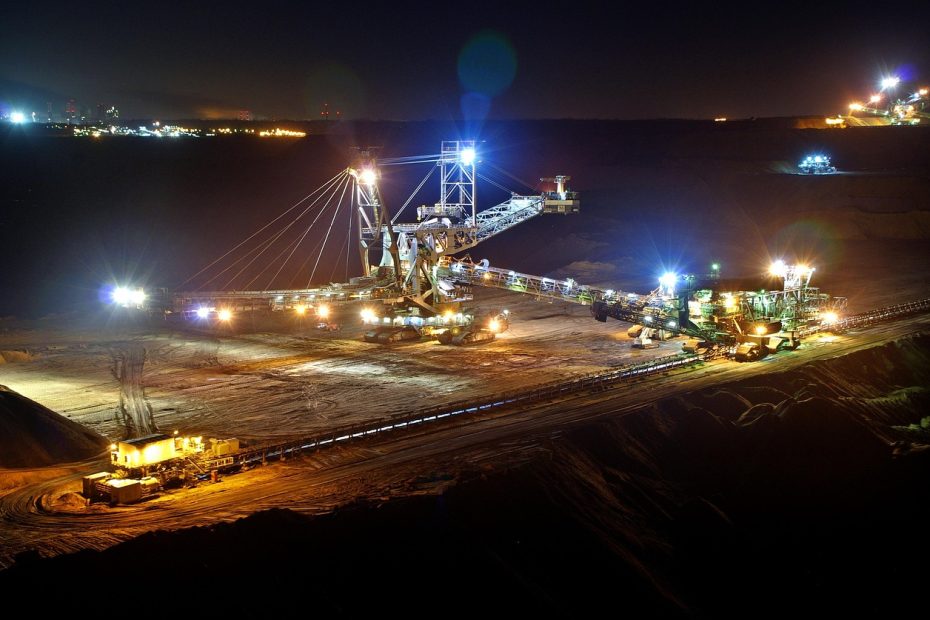
The twentieth century also saw greater mechanization in coal mining. Surface mining expanded where geology allowed it, using large excavators, draglines, trucks, and conveyor systems. Underground mining became more mechanized with longwall systems, continuous miners, improved ventilation, and stronger safety regulation in many countries. Productivity increased, but employment often declined where mechanization replaced manual labor.
Coal’s supply chain became more efficient, but also more capital-intensive. Large mines, rail networks, export terminals, power plants, and steel mills required long-term investment. This created a durable infrastructure base that helped coal remain competitive even as other fuels gained market share.
Environmental Pressure and the Changing Coal Industry
Coal’s environmental impacts became more politically and economically important in the second half of the twentieth century and into the twenty-first century. Air pollution from coal combustion affected cities and industrial regions. Sulfur dioxide, nitrogen oxides, particulate matter, mercury, coal ash, mine waste, land disturbance, and water pollution all became major policy concerns. Later, carbon dioxide emissions placed coal at the center of climate policy debates.
Governments responded in different ways. Some required scrubbers, filters, low-sulfur coal, mine reclamation, ash management, and stricter power plant emissions standards. Others pursued coal phaseouts, carbon pricing, renewable energy targets, or restrictions on new coal-fired power plants. In some markets, coal declined rapidly because natural gas and renewables became cheaper or because aging coal plants were retired.
This changed the coal supply chain. Producers had to meet tighter quality requirements. Utilities invested in pollution-control systems or shifted fuel sourcing. Some coal mines closed because they could not compete under new cost structures. Railroads and ports exposed to coal volumes had to adapt. Mining regions faced employment losses and economic transition challenges.
However, environmental pressure did not eliminate coal globally. In several fast-growing economies, coal remained attractive because it could provide large volumes of electricity and support industrial growth. Countries with large domestic coal reserves often continued to rely on coal for energy security and affordability. In steelmaking, alternatives to metallurgical coal developed more slowly than alternatives in power generation.
The result is an uneven global transition. Coal has declined sharply in some regions while remaining central in others. Its future depends not only on climate policy, but also on grid reliability, industrial demand, energy prices, domestic resource politics, and the availability of practical alternatives.
Coal’s Shift Toward Asia
One of the largest changes in coal history has been the shift of coal demand toward Asia. As Western Europe and parts of North America reduced coal use, China, India, Indonesia, Vietnam, and other Asian economies became increasingly important to global coal demand.
China’s industrial rise was deeply connected to coal. Coal fueled power generation, steel production, cement manufacturing, chemicals, rail transport, and heavy industry. Domestic coal mining became one of the largest energy systems in the world, supported by rail corridors, inland logistics, power plants, industrial clusters, and coastal import terminals. Coal helped power rapid urbanization and manufacturing growth.
India’s coal story has been shaped by electricity demand, domestic mining, rail logistics, state-owned production, and industrial growth. Coal has remained central to power generation because of its domestic availability and its role in supplying affordable electricity to a large and growing economy. Import dependence for certain coal qualities, especially for steelmaking and coastal power plants, has also made India part of the global coal trade.
Southeast Asia has added another layer to the coal market. Some countries developed coal plants to meet rising electricity demand, reduce dependence on oil-fired generation, and support industrialization. Indonesia became a major coal exporter, linking domestic mines to seaborne markets across Asia.
This Asian shift matters because it changed coal’s global center of gravity. Coal is no longer primarily a story of the industrial revolution in Europe and North America. It is also a story of modern urbanization, manufacturing, infrastructure development, and energy security in Asia.
The Modern Coal Supply Chain
The modern coal supply chain begins with exploration and reserve assessment. Companies and governments identify coal seams, evaluate thickness, depth, quality, mining conditions, water issues, and transport access. A coal deposit only becomes economically useful if it can be mined, processed, moved, and sold at a competitive cost.
Mining is the next stage. Coal can be produced from surface mines or underground mines. Surface mining is often cheaper where coal seams are close to the surface, but it creates major land-use and reclamation issues. Underground mining is used for deeper deposits and requires more complex safety systems, ventilation, roof control, and labor management.
After extraction, coal is often processed or washed to remove impurities and improve quality. Coal quality matters because power plants, steel mills, and industrial users are designed for specific fuel characteristics. Poor-quality coal can reduce efficiency, increase emissions, damage equipment, or require blending with better coal.
Transport is one of the most important cost factors. Coal moves by truck, conveyor, rail, barge, river vessel, and ocean bulk carrier. Large coal systems depend on dedicated logistics. A mine without reliable transport access has limited value. A power plant without reliable coal deliveries faces reliability risks.
Storage also matters. Coal can be stockpiled at mines, rail yards, ports, power plants, and industrial sites. This gives coal a security advantage over fuels that require more complex storage infrastructure. However, storage also requires land, handling equipment, dust control, fire management, and inventory planning.
End users include power plants, steel mills, cement plants, chemical producers, industrial boilers, and in some countries households or district heating systems. Each customer type has different quality requirements, contract structures, and delivery needs. The coal supply chain is therefore not one single system. It is a set of linked supply chains built around different coal qualities and different industrial uses.
Coal’s Role in Steel, Cement, and Industrial Heat
Even where coal-fired electricity declines, coal can remain important in heavy industry. Steel, cement, and industrial heat are among the hardest parts of the energy system to transform.
Metallurgical coal is central to traditional steel production. Blast furnace steelmaking requires coke, and coke requires high-quality coking coal. Alternatives such as electric arc furnaces, direct reduced iron, hydrogen-based processes, and increased scrap recycling are expanding, but they depend on electricity supply, scrap availability, technology cost, and industrial policy. For many steel-producing countries, metallurgical coal remains strategically important.
Cement production also relies heavily on high-temperature heat. Coal and petroleum coke have long been used in cement kilns because they provide intense, stable heat. Cement demand is tied to construction, infrastructure, urbanization, and industrial development. As a result, coal use in cement can persist even when power generation shifts toward other fuels.
Coal is also used in industrial boilers, chemicals, brickmaking, paper, textiles, and other manufacturing sectors in some countries. These uses are often less visible than large power plants but can be important sources of demand. Replacing coal in smaller industrial facilities may require fuel switching, electrification, biomass, waste heat recovery, efficiency upgrades, or new industrial equipment.
This industrial role explains why coal transitions vary by sector. Electricity can often shift toward gas, nuclear, hydro, solar, wind, or storage more quickly than heavy industry can shift away from coal-based heat and chemical processes. The coal supply chain therefore remains tied to industrial modernization, not only power-sector policy.
Coal Decline, Coal Resilience, and the Future
Coal’s future is divided. In some countries, coal is in structural decline. Aging coal plants are closing. Mines are being retired. Utilities are investing in renewables, gas, storage, nuclear power, transmission, and demand-side management. Air pollution rules and climate commitments make new coal projects harder to finance. Banks, insurers, and development institutions have reduced support for many coal projects.
In other countries, coal remains resilient. Domestic coal reserves support energy security. Growing electricity demand keeps coal plants running. Steel and cement industries continue to require coal or coke. Grid constraints slow the growth of alternatives. High gas prices can make coal more competitive. In some markets, coal remains the fuel that planners trust for large-scale, dispatchable power.
The long-term direction of coal will depend on several supply-chain questions. Can power grids absorb more variable renewable electricity? Can countries finance transmission, storage, nuclear power, or gas infrastructure quickly enough? Can steelmaking reduce dependence on metallurgical coal? Can industrial heat be electrified or supplied by lower-carbon fuels? Can mining regions create new economic bases after coal declines?
Coal’s history shows why these questions are difficult. Coal is not only a fuel choice. It is a built system of mines, railways, ports, power plants, steel mills, cement kilns, utilities, workers, contracts, and regional economies. Replacing coal means replacing or restructuring an entire supply chain.
Conclusion: Why Coal Still Matters in Energy History
Coal shaped the modern world by making large-scale industrial energy available before oil, natural gas, nuclear power, and modern renewables reached maturity. It powered factories, railroads, steamships, cities, steel mills, power plants, and national industrial strategies. Its supply chain connected geology to mining, transportation, manufacturing, electricity, trade, and state policy.
The history of coal is also the history of industrial scale. Coal became powerful because it could be mined in large volumes, moved through rail and port systems, stored near users, and converted into heat, steam, electricity, coke, gas, and industrial output. Few fuels have had such a broad impact on economic geography.
Coal’s future will not look like its past. In many countries, its role is shrinking. In others, it remains central to power generation, steelmaking, cement, and energy security. That tension makes coal one of the most important subjects in global energy history: a fuel that built the industrial age, still supports major supply chains, and now sits at the center of the world’s energy transition.