Chile no longer needs to prove that it has world-class renewable resources. The Atacama Desert offers exceptional solar conditions, the long Pacific coast creates several wind corridors, and hydropower has served the electricity system for generations. The central question has changed. Chile must now convert a rapidly expanding collection of renewable projects into a balanced national power system that can deliver electricity when and where it is needed.
Renewables account for roughly two-thirds of Chile’s installed electricity capacity and close to 70% of generation. Solar and wind have become especially important, with their combined capacity reaching almost half of the national total by the end of 2025. That expansion has reduced the role of coal and strengthened Chile’s position as one of Latin America’s leading clean-energy markets. It has also exposed transmission, storage, and market-design problems that were less urgent when renewable penetration was lower.
The Atacama Desert Has Changed Chile’s Electricity Mix
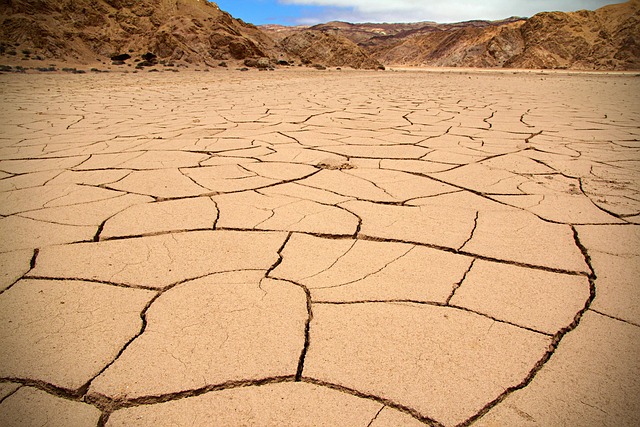
Northern Chile is the center of the country’s solar industry. The Atacama Desert combines intense radiation, dry conditions, high elevation, and large areas suitable for power development. These characteristics have supported photovoltaic projects and concentrated solar power, although conventional solar PV has expanded much faster because it is cheaper and easier to deploy.
Chile had almost 11 GW of solar capacity in 2024 after adding more than 2 GW during the year. Solar was already the country’s largest renewable technology by installed capacity, ahead of hydropower and wind. New projects have continued to enter development, particularly in Antofagasta and Atacama, where companies are also pairing generation with battery systems.
The scale of the buildout has changed daily electricity-market conditions. During sunny hours, northern solar plants can produce more electricity than the local grid and regional demand can absorb. Prices can fall sharply, while some generators are ordered to reduce output. The problem is not a shortage of renewable energy. It is the inability to move or store all the available power.
Adding another solar farm does not create its full value when transmission is limited or many projects generate at the same time. Developers increasingly need to consider grid location, storage duration, connection schedules, and expected curtailment rather than focusing only on the quality of the solar resource.
Chile’s Best Renewable Resources Are Far from Its Main Demand Centers
Chile’s geography shapes almost every energy decision. The country extends more than 4,000 kilometers from north to south, while major population and commercial demand is concentrated around Santiago and the central regions. Mining creates large industrial loads in the north, but it does not consume all the electricity that the region’s solar and wind projects can produce.
Chile connected its former northern and central systems into a single national grid in 2017. That was an important reform, but physical bottlenecks remain. Transmission corridors must carry growing volumes of electricity across long distances, and delays in new lines can leave renewable projects operating below their potential.
More than 6 TWh of solar and wind generation was reportedly curtailed during 2025. The lost output represents foregone revenue for generators and electricity that could otherwise have displaced fossil generation at other hours or in other regions.
New high-voltage transmission is therefore as important as additional generation. The system also needs stronger regional links, modern substations, improved forecasting, and more flexible operating rules for a grid in which weather-dependent resources can represent a very high share of supply.
Battery Storage Is Becoming the Commercial Center of the Market
Chile’s storage market is developing rapidly because the economic need is direct. Batteries can charge during periods of high solar output and discharge after sunset, when demand remains high and solar generation falls. This reduces curtailment, supports evening reliability, and allows developers to sell electricity during more valuable hours.
Most projects use lithium-ion battery energy storage systems placed beside solar plants or built as stand-alone facilities. Northern regions dominate the early market because that is where curtailment pressure is strongest. By August 2025, eight storage systems with a combined 801 MW of capacity and 2,773 MWh of stored energy were in testing, with most located in Antofagasta.
Chile’s decarbonization planning calls for approximately 6 GW of storage by 2030. Reaching that level would change the operating profile of the grid, but capacity alone is not enough. Project revenue depends on market rules, capacity payments, price differences, ancillary services, and the treatment of charging and discharging.
Storage also connects the transition with Chile’s mineral economy. The country is a major lithium producer and the world’s leading copper producer, while batteries, transmission lines, electric vehicles, and renewable projects require both materials. Chile has not yet developed a manufacturing position equal to its mineral importance, but the transition creates pressure to capture more value through refining, battery materials, engineering, and industrial technology.
Wind, Hydropower, and Geothermal Broaden the Renewable Base
Solar receives the most attention, but Chile needs a wider renewable portfolio. Wind capacity exceeded 4.7 GW in 2024 and has strong potential in northern, central, and southern regions. Wind can complement solar when output is available at different hours, reducing some of the pressure created by a generation mix concentrated around midday.
The far south, particularly Magallanes, has exceptional wind resources. Its distance from the main grid limits its role in conventional supply, but it has made the region central to proposals for green hydrogen and renewable fuels. These projects would use wind power locally to produce hydrogen, ammonia, methanol, or synthetic fuels for industry and export.
Hydropower remains a major renewable source and provides valuable flexibility. However, prolonged drought and changing water conditions have reduced confidence in large hydro as the main engine of future expansion. Water competition and environmental review also make major dams more difficult to develop than solar or wind.
Geothermal energy is smaller but strategically useful. Chile lies along the Pacific Ring of Fire and has extensive potential, especially in the Andes. Existing capacity remains limited because exploration is expensive and risky. Unlike solar and wind, geothermal plants can provide steady output, giving the technology greater system value than its current scale suggests.
Mining and Green Hydrogen Will Shape Future Demand
Chile’s renewable market is closely tied to mining. Copper and lithium operations require large volumes of electricity, and many companies have signed renewable supply contracts or adopted emissions-reduction strategies. Electrification of mine equipment, desalination, ore processing, and transport could increase power demand even as individual operations become more efficient.
The mining connection gives Chile a strong domestic customer base, but it also raises reliability standards. Large mines cannot depend on electricity that is available only during favorable weather. Their demand supports investment in firm contracts, transmission, storage, flexible generation, and possibly green hydrogen for processes that are difficult to electrify directly.
Green hydrogen is another potential source of demand. Chile aims to become a competitive producer and exporter, using solar power in the north and wind in the south. Early projects have moved more slowly than the most optimistic targets suggested because of high capital costs, uncertain buyers, infrastructure needs, and competition from other regions. The strongest opportunities may begin with domestic uses such as mining explosives, ammonia, refining, heavy transport, and industrial heat.
Chile’s renewable future will be determined less by resource availability than by system integration. The decisive work now lies in transmission construction, storage deployment, market reform, permitting, and dependable demand. If those elements advance together, Chile can move from being a successful renewable developer to operating one of the world’s most advanced high-renewable electricity systems.