Renewable electricity has moved from a secondary source to a central part of the Dutch power system. In 2025, renewable sources produced about 64.3 billion kilowatt-hours and accounted for 49 percent of total electricity generation. Solar was the largest individual renewable source, while offshore and onshore wind together supplied an even greater volume.
The Netherlands is no longer dealing mainly with the question of whether wind and solar can be deployed at scale. Its more difficult problem is coordinating generation, networks and demand. Solar capacity has expanded faster than parts of the distribution grid can accommodate, while the planned offshore wind programme is larger than current industrial electricity demand can easily absorb.
This has changed the character of the Dutch energy transition. The next phase will require major grid investment, more flexible electricity use and a financial model that can keep offshore projects commercially viable when construction costs and market risks are rising.
Solar Power Has Filled Roofs and Reshaped Daytime Electricity Supply
The Netherlands became one of Europe’s most concentrated solar markets despite its northern climate and limited land area. Solar electricity production rose to approximately 25.5 billion kilowatt-hours in 2025, around 17 percent more than in 2024. Output has increased more than twentyfold in a decade.
Much of this growth came from distributed installations. Panels have been placed on homes, warehouses, farms, offices, car parks and industrial buildings, while larger solar parks have also been developed. The country’s dense population and extensive building stock made rooftops particularly important because they allowed capacity to grow without requiring every project to compete for open land.
Solar’s rapid expansion has reduced the need for fossil-fuel generation during sunny hours, but it has also altered electricity prices and network flows. Large volumes enter the grid around midday, when household demand may be relatively low. In neighborhoods with extensive rooftop solar, local cables and transformers can face more electricity flowing outward than they were originally designed to carry.
The result is a shift from policies aimed mainly at encouraging installation toward policies that also reward better timing. Batteries, smart electric-vehicle charging, heat pumps, flexible industrial demand and systems that temporarily reduce solar exports can make generation more valuable to the grid.
Future solar growth is therefore likely to be more selective. Projects that include storage, connect near available grid capacity or supply nearby users will have an advantage over projects that simply add generation to already congested areas.
Offshore Wind Is Moving From Expansion Programme to Industrial Strategy
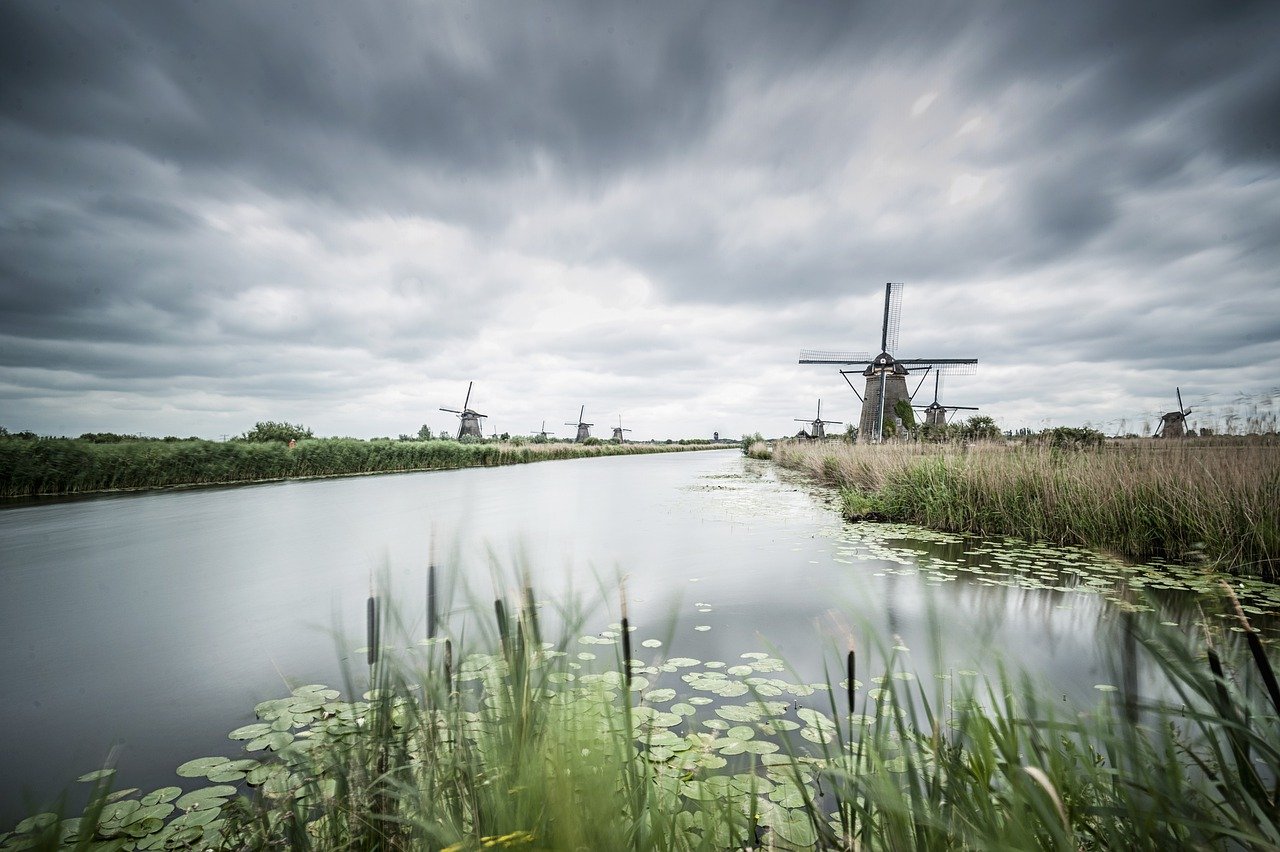
The North Sea is the Netherlands’ largest long-term renewable resource. Its relatively shallow waters, strong winds, major ports and established offshore engineering sector created favorable conditions for large wind farms.
Dutch offshore capacity reached approximately 4.7 GW, surpassing the government’s original 4.5 GW objective. Large projects including Borssele, Hollandse Kust and Gemini established the sector at commercial scale, while additional developments are planned in the IJmuiden Ver, Nederwiek and Doordewind zones.
The current offshore roadmap targets about 23 GW of installed capacity. The government estimates that this level could provide roughly 16 percent of the country’s total energy needs, not only electricity consumption. Permits covering another 5.5 GW have already been awarded, and the long-term infrastructure plan points toward 30–40 GW by 2040.
The programme is nevertheless entering a more difficult period. Early Dutch offshore tenders became known for projects that required little or no direct operating subsidy. That model depended on falling turbine costs, low financing costs, predictable electricity demand and confidence that developers could earn sufficient revenue from the wholesale market.
Those conditions have weakened. Turbine and construction costs have risen, financing has become more expensive and industrial electrification has progressed more slowly than expected. A tender for the Nederwiek I-A site failed to attract an application, showing that access to a seabed lease and grid connection is no longer enough to guarantee investment.
The Netherlands is responding by moving toward two-way Contracts for Difference. Under this system, the government and developer agree on a reference price. Public support covers part of the difference when market prices fall below that level, while developers return excess revenue when prices rise above it. The first offshore wind contracts under this approach are planned for late 2027.
This change makes offshore wind part of a wider industrial policy. New wind farms will depend on the development of electric industry, hydrogen production, data infrastructure, storage and international interconnectors capable of using their output.
Grid Congestion Has Become the Main Constraint on New Capacity
The Dutch electricity network was built around a smaller number of central power stations supplying predictable demand. Renewable energy has created a more complex pattern. Millions of solar panels inject electricity into local distribution systems, offshore wind enters the high-voltage network at coastal connection points and electrified transport and heating increase demand in new locations.
Grid operators are expanding substations, transmission corridors and local networks, but major projects require years of planning, permitting and construction. Equipment shortages, limited engineering capacity and competition for space can extend project schedules.
By 2025, regional grid operators reported more than 15,000 unique requests waiting for capacity to consume electricity and more than 8,600 requests waiting for capacity to feed electricity into the network. These lists include companies seeking new or larger connections as well as renewable projects unable to export their full output.
Congestion can slow industrial decarbonisation even when renewable electricity is available somewhere within the national system. A factory may want to replace natural gas with electric equipment but be unable to obtain the necessary connection. At the same time, a solar project in another region may face restrictions because its local network cannot accept additional generation.
The Netherlands is increasingly using flexible contracts, congestion management and local energy hubs to make better use of existing infrastructure. An energy hub allows several businesses or generators to coordinate their combined demand and production so that their total network use remains within an agreed limit.
These measures can reduce pressure, but they cannot replace physical expansion. The pace of offshore wind construction, industrial electrification and solar development will have to remain aligned with the ability of TenneT and regional operators to connect and transport the power.
Renewable Electricity Is Growing Faster Than Renewable Energy Use
The electricity statistics can make the Dutch transition appear more complete than it is. Renewables supplied 49 percent of electricity production in 2025, but renewable sources represented only 19.8 percent of total gross energy consumption in 2024.
The difference exists because electricity is only one part of the energy system. Industry still uses natural gas and other fuels for high-temperature heat and feedstocks. Buildings require energy for heating, while road transport, aviation and shipping continue to consume large quantities of liquid fuel.
Biomass also remains important when the entire energy system is measured. In 2024, biomass was the largest renewable energy source by total energy consumption, ahead of wind and solar. It is used in transport fuels, heat production and some electricity generation. Its future role will depend on sustainability standards and decisions about where limited biological materials provide the greatest value.
Wind and solar can gain a larger share of total energy consumption only if more transport, heating and industrial activity becomes electric. Renewable hydrogen and synthetic fuels may be needed for uses that cannot be electrified directly, although producing these fuels requires large amounts of renewable electricity.
The Next Stage Depends on Creating Flexible Demand
The Netherlands has demonstrated that a densely populated and industrialised country can expand solar and wind generation quickly. It now needs electricity demand to develop in parallel.
Industrial consumers can provide stable demand for offshore wind, but only when grid connections, equipment investments and electricity prices support electrification. Hydrogen electrolysers could absorb power during periods of high wind generation, while batteries and international interconnectors can move electricity across time or borders.
Households will also become more active parts of the system. Electric vehicles, heat pumps, home batteries and smart appliances can adjust consumption in response to local network conditions and electricity prices. This flexibility will become increasingly important as fixed incentives for sending rooftop solar power into the grid are reduced.
Dutch renewable development is therefore moving away from a simple capacity race. More turbines and panels remain necessary, but their value will depend on where they connect, when their electricity is used and whether consumers can respond to changing supply.
The Netherlands’ next renewable milestone will not be defined by one offshore wind farm or another record year for solar generation. It will be defined by whether the country can turn a large but variable supply of renewable electricity into a coordinated energy system for industry, buildings and transport.