Namibia already occupies an important place in the global nuclear industry, although it does not operate a nuclear power plant. Its role begins in the Namib Desert, where large uranium mines supply fuel to reactor operators in Asia, Europe and North America. This gives the country a nuclear identity based on mining and exports rather than domestic electricity generation.
That position is beginning to change. The government has placed nuclear development within its national economic plans, linking it to industrial growth, technical capacity and the possible introduction of nuclear power. Yet producing uranium and operating a commercial reactor require very different institutions and infrastructure. Namibia’s future will depend on whether it can connect its mineral strength to a credible power programme.
Uranium Gives Namibia a Major Role in the Global Fuel Supply
Namibia is one of the world’s leading uranium-producing countries. In 2024, its mines produced about 7,333 tonnes of uranium, equal to roughly 12% of global mine output. Production comes mainly from large open-pit operations in the Erongo Region, where uranium mining has developed over several decades.
Rössing is the country’s longest-running commercial uranium mine. It began production in 1976 and remains one of Namibia’s most important mining operations. The mine produced approximately 2,600 tonnes of uranium oxide in 2024 and is continuing work intended to extend its operating life. Its majority owner is China National Uranium Corporation, reflecting the strong role of Chinese capital in Namibia’s uranium industry.
The Husab mine, operated by Swakop Uranium and linked to China General Nuclear, is one of the largest uranium mines in the world. It has become central to Namibia’s production growth and to China’s long-term nuclear fuel strategy. Langer Heinrich adds a different international connection. The mine, majority owned by Australia’s Paladin Energy, returned to commercial production in 2024 after several years on care and maintenance and is moving toward full operating capacity.
These mines place Namibia inside a supply chain that extends far beyond extraction. Its uranium is generally converted, enriched and fabricated elsewhere before reaching a reactor, leaving most higher-value fuel-cycle activity outside the country.
The Policy Is Shifting From Mineral Exports to Nuclear Development
Namibia’s nuclear policy is increasingly focused on retaining more value from its uranium resources. The Sixth National Development Plan identifies the nuclear industry as a potential source of economic growth and calls for feasible flagship projects that can support energy diversification and technological development.
The government’s position presented to the International Atomic Energy Agency in 2025 went further. It stated that Namibia intends to explore nuclear power, review its legal framework, strengthen nuclear governance, develop skilled personnel and investigate opportunities within the nuclear fuel cycle. These opportunities could include activities such as uranium conversion, although each additional stage would require major investment, reliable electricity, specialist technology and access to international markets.
A national Nuclear Industry Strategy was approved in 2025, giving the policy a more formal structure. The Ministry of Industries, Mines and Energy has also included a small modular nuclear plant among its development targets for 2030. This is an ambitious objective rather than evidence that a reactor has entered construction or final procurement.
A power programme would still require an independent regulator, site and environmental studies, emergency and waste planning, a financing model and a trained operator. Namibia is building parts of this foundation but remains at an early stage.
A Reactor Must Fit Namibia’s Electricity System
Namibia’s interest in nuclear power is linked to a real energy-security problem. The country has historically depended heavily on imported electricity from the Southern African regional market. Domestic generation includes hydropower, solar, wind and thermal capacity, but imports remain important when local production cannot meet demand.
A nuclear plant could provide stable domestic generation and reduce exposure to regional supply shortages. It could also support mining, mineral processing, desalination, green hydrogen and other electricity-intensive industries. Yet the small size of Namibia’s power system creates a major technical limitation.
Namibia had approximately 695 MW of installed generating capacity in 2024, while peak demand was already above 600 MW. A conventional large reactor would be too large for a system of this scale. If one generating unit represented a substantial share of national demand, an unplanned shutdown could create a severe system imbalance.
The country’s integrated resource planning has therefore focused on small modular reactors rather than conventional gigawatt-scale plants. Earlier analysis suggested that even a reactor of around 300 MW could be difficult to absorb without stronger transmission, higher domestic demand or firm export arrangements with neighboring countries. A nuclear unit would need several reliable transmission routes so that its output could move safely across the system.
Annual demand alone is therefore not enough to justify a reactor. Off-peak demand, reserve capacity and the ability to manage a sudden outage are equally important. Large industrial loads or deeper regional integration could improve the case, but they would need to exist before investment.
Water and Infrastructure Are Part of the Nuclear Question
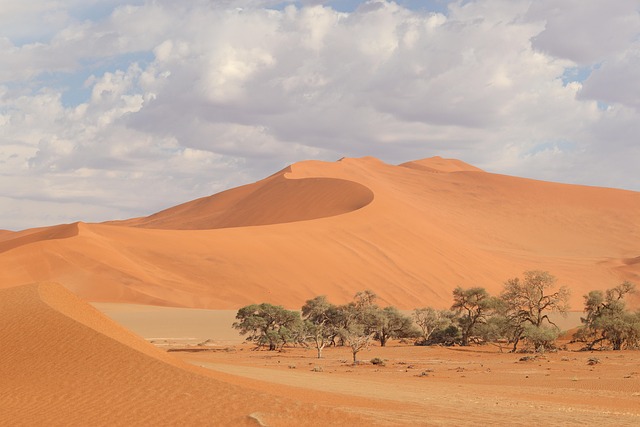
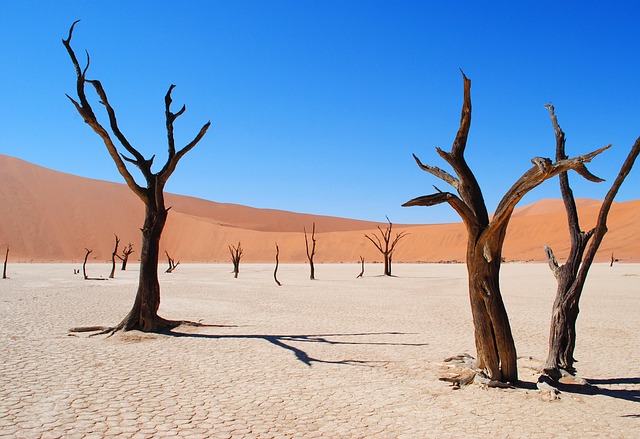
Water is already a strategic constraint for uranium mining in the Erongo Region. Rössing, Husab and Langer Heinrich operate in one of the driest environments in the world and depend on coastal water infrastructure and desalination. Namibia Water and Swakop Uranium finalized plans for a new desalination joint venture in late 2025, showing how closely mineral development is connected to water supply.
A future reactor would add another water and siting decision. A coastal site could use seawater for cooling and sit near ports and industry, but it would still require environmental assessment, stronger transmission and coastal-hazard planning. An inland project would face harder water constraints.
Financing may be the larger obstacle. Nuclear projects require substantial capital before they produce any electricity, and first projects in newcomer countries carry additional regulatory and construction risk. Namibia would probably need strong state participation and an international technology partner. A vendor-backed model could reduce some early barriers, but it could also create long-term dependence on a foreign supplier for fuel services, maintenance, training and specialist components.
Human capacity is equally important. Namibia has valuable experience in radiation protection, uranium transport and mine regulation, but reactor licensing and operation require a much broader institutional base. Building that base is likely to take years even if the political commitment remains strong.
Uranium Will Lead Namibia’s Nuclear Economy for Years
Namibia’s nuclear sector is likely to remain dominated by uranium mining in the near term. Stronger global reactor demand, the return of Langer Heinrich and possible new mine developments give the country an opportunity to increase exports, government revenue and local procurement.
The larger question is whether Namibia can move beyond uranium concentrate. Fuel-cycle services, technical education and eventually power generation could create more domestic value, but mineral policy alone cannot deliver them.
A Namibian reactor becomes more realistic if electricity demand grows, the transmission system is strengthened, regulation becomes fully independent and a workable financing structure is established. Until then, the country’s most credible nuclear advantage remains the resource it already produces. The policy challenge is to use that position to build durable skills and institutions without treating an announced reactor target as a completed energy project.