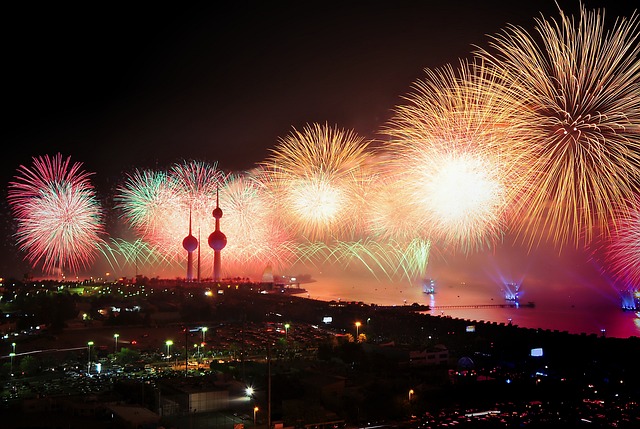
Kuwait’s energy system begins with oil, but it does not end there. Petroleum exports built the modern economy, finance much of the public sector and remain central to the country’s international importance. At home, however, Kuwait must manage a different energy challenge. Extreme summer heat creates heavy demand for air conditioning, while electricity generation is closely connected to the production of desalinated water. Natural gas, imported LNG, oil-fired power stations, refineries and regional grid links must therefore support a system in which demand can rise sharply during the hottest months.
Kuwait has the financial resources, solar conditions and technical experience to modernize this system. The harder question is how quickly it can turn those advantages into new power capacity, better efficiency and a larger renewable energy sector.
Oil Is More Than an Energy Source in Kuwait
Few countries are as closely connected to oil as Kuwait. Commercial oil development transformed a small Gulf trading society into a wealthy state with modern roads, hospitals, schools, ports and public services. Petroleum continues to shape government income, export earnings, employment policy and Kuwait’s role within OPEC.
Kuwait holds about 6% of the world’s proved oil reserves, based on the U.S. Energy Information Administration’s estimate for 2022. Those reserves include Kuwait’s share of the Neutral Zone, an oil-producing area shared with Saudi Arabia. The country also remains one of the larger crude oil producers within OPEC, although actual output can change under production agreements and market conditions. [1]
Most production is controlled through Kuwait Petroleum Corporation and its subsidiaries. The giant Burgan field in southeastern Kuwait has historically been the center of the upstream sector, while northern and western fields add to national output. Kuwait is also developing heavier crude resources and non-associated gas as it tries to widen the range of fuels available to both export markets and domestic consumers.
The oil industry is not simply a source of crude for foreign buyers. It supports engineering firms, shipping services, storage facilities, petrochemical plants and specialized industrial towns. Ahmadi, for example, grew around the petroleum sector and remains closely tied to Kuwait’s national energy institutions.
Kuwait Petroleum Corporation’s long-term strategy calls for sustainable crude production capacity of four million barrels per day by 2035, including the country’s share of production from the Divided Zone. Reaching that level would require continued spending on reservoirs, drilling, processing facilities and export infrastructure. [2]
Al-Zour Has Changed Kuwait’s Refining Position
Kuwait has invested heavily in refining because exporting finished fuels can create more value than selling crude alone. The country’s downstream system now centers on three large refineries: Mina Al-Ahmadi, Mina Abdullah and Al-Zour.
Kuwait National Petroleum Company operates Mina Al-Ahmadi, with capacity of about 346,000 barrels per day, and Mina Abdullah, with capacity of about 454,000 barrels per day. Together, the two plants can process around 800,000 barrels per day. Their modernization under the Clean Fuels Project improved Kuwait’s ability to produce lower-sulfur fuels that meet tighter international standards. [3]
The larger change came from Al-Zour Refinery in southern Kuwait. The plant reached its full refining capacity of 615,000 barrels per day, lifting Kuwait’s total domestic refining capacity to roughly 1.4 million barrels per day. Al-Zour can process several Kuwaiti crude grades and produce diesel, jet fuel, naphtha and low-sulfur fuel oil. [4]
Part of Al-Zour’s importance is domestic. Its low-sulfur fuel can be supplied to Kuwait’s power and water system when gas availability is limited. The refinery therefore connects the export economy with electricity security. It also gives Kuwait more flexibility to shift between crude exports and petroleum product exports as international demand changes.
The Al-Zour complex is planned as more than a refinery. It also includes Kuwait’s permanent LNG import terminal and proposed petrochemical operations. This concentration of refining, gas handling and future chemical production is turning the southern coast into one of the country’s most important energy and industrial zones.
Natural Gas Is Kuwait’s Preferred Power Fuel, but Supply Is Tight
Natural gas has become increasingly important because it can produce electricity with lower local pollution and lower carbon emissions than burning fuel oil or diesel. Gas-fired generation also allows Kuwait to preserve more valuable petroleum products for export.
Domestic gas supply comes partly from oil fields, where gas is produced together with crude. Kuwait is also developing non-associated gas fields, especially in northern areas, to create a source that is not directly tied to oil production. Kuwait Petroleum Corporation aims to raise sustainable non-associated gas production to two billion cubic feet per day by 2040. [2]
That goal reflects a long-running domestic problem: Kuwait’s demand for gas has often grown faster than local production. Power stations, refineries, petrochemical plants and industrial facilities all compete for supply. Demand becomes especially difficult to manage during summer, when air-conditioning use pushes the electricity system toward its annual peak.
Kuwait has responded by importing liquefied natural gas. The permanent LNG terminal at Al-Zour has eight large storage tanks and two marine berths. It was designed to receive LNG from large carriers, store it and convert it back into gas for the national network. Its scale allows Kuwait to purchase gas from global suppliers instead of depending entirely on pipelines or domestic fields. [5]
LNG improves flexibility, but it also connects domestic electricity costs to international gas markets. Kuwait must balance the price of imported LNG against the value of oil products that would otherwise be burned in power stations. When gas is available at a reasonable price, importing it can free additional crude oil, diesel or fuel oil for export.
Electricity and Water Form One Energy System
Electricity policy in Kuwait cannot be separated from water policy. The country has very limited natural freshwater resources, so seawater desalination provides most municipal water. Many large facilities produce electricity and desalinated water together, using shared fuel and steam systems.
This arrangement made sense when domestic oil and gas were inexpensive and demand was lower. Today, it creates a major planning challenge. Population growth, larger homes, urban expansion, air conditioning and water use all place pressure on the same group of power and desalination plants.
Kuwait’s electricity system relies overwhelmingly on natural gas and petroleum products. Coal does not have a meaningful role, nuclear power is absent and renewable generation remains small. The national grid must therefore secure enough fuel and generation capacity before temperatures reach their summer peak.
During periods of extreme heat, demand can approach available capacity. A major outage in June 2024 was linked by the Ministry of Electricity and Water to high summer demand. The event showed that Kuwait’s energy problem is not a lack of financial resources or fuel reserves alone. Timely construction, plant maintenance, reserve capacity and demand management also matter. [6]
Electricity prices have historically been kept low through public support. This limits the incentive for consumers to reduce air-conditioning use, improve insulation or invest in efficient buildings. It also increases the financial cost of each additional unit of electricity and water supplied by the state.
Efficiency could provide Kuwait with one of its fastest energy gains. Better building codes, modern cooling systems, district cooling, efficient appliances and advanced meters could reduce demand without limiting economic activity. In a country where cooling dominates summer consumption, saving electricity during the hottest afternoon hours can be as valuable as building additional generation.
The Grid Is Becoming a Regional Energy Asset
Kuwait’s domestic power network is connected to the wider Gulf Cooperation Council electricity system. The GCC interconnection allows participating countries to support one another during emergencies and exchange power when one system has extra capacity.
For Kuwait, regional connection is especially valuable during summer peaks or unexpected plant failures. Electricity imports cannot replace sufficient domestic capacity, but they can provide an additional layer of security. They can also reduce the need for each country to maintain all possible reserve capacity on its own.
The Gulf Cooperation Council Interconnection Authority is expanding the link with Kuwait through new 400-kilovolt infrastructure at Al-Wafrah. The project is intended to raise transfer capacity with Kuwait to around 3,000 megawatts. The Al-Wafrah area is also becoming part of the planned GCC connection with southern Iraq. [7]
These projects could turn Kuwait into a more important point in a regional electricity market. In the future, stronger interconnection could support larger renewable projects because countries would be able to sell surplus electricity across borders. Solar production in one state could help meet demand elsewhere, while gas-fired plants could provide backup when renewable output falls.
Domestic transmission investment remains equally important. New housing areas, industrial projects and infrastructure corridors must be connected before demand arrives. Delayed transmission lines or substations can leave generation capacity unable to reach the places where electricity is needed.
Solar Power Fits Kuwait’s Geography but Not Yet Its Energy Mix
Kuwait has one of the clearest geographic cases for solar power. The country has open desert land, strong solar radiation and high electricity demand during sunny summer hours. Solar generation can therefore produce power at the same time that air conditioners place the greatest pressure on the grid.
Kuwait’s main renewable demonstration site is the Shagaya Renewable Energy Park west of Kuwait City. Its first phase combined three technologies: a 50-megawatt concentrated solar power plant, a 10-megawatt photovoltaic plant and a 10-megawatt wind farm. The concentrated solar facility includes thermal storage, allowing some electricity production after direct sunlight has declined. [8]
Shagaya was important because it tested how different renewable technologies perform in Kuwait’s dust, heat and desert environment. High temperatures can reduce the efficiency of photovoltaic panels, while dust and sand increase cleaning and maintenance needs. Water use is also a consideration, especially for technologies that require cooling or regular panel washing.
Despite Shagaya, renewable power still forms only a very small part of Kuwait’s electricity system. The country has stated a goal of producing 15% of electricity from renewable sources by 2030, but reaching that share requires much larger projects, clearer procurement schedules and stronger grid preparation. [9]
Utility-scale solar is the most obvious growth area, although rooftop systems could also reduce daytime demand in commercial buildings, warehouses, schools and public facilities. Wind resources are more limited than solar resources, but selected locations may support additional projects.
Battery storage could become important as solar capacity grows. Storage can move part of the afternoon output into the evening, when people return home and electricity demand remains high. It can also help stabilize the grid during sudden changes in solar production caused by dust or cloud cover.
Coal Has Almost No Place in Kuwait’s Energy Economy
Coal is not a significant part of Kuwait’s electricity mix, domestic production or national resource strategy. The country has no major coal reserves and little reason to construct a coal-based power system while it has large oil resources, growing gas infrastructure and strong solar potential.
Small quantities of coal or coal-based materials may enter the country for industrial purposes, but coal is not a meaningful source of national power. Kuwait therefore does not face the same coal transition questions found in countries with large mining regions, coal-fired power stations or steel industries built around domestic coal.
The absence of coal does not make Kuwait’s electricity system low-carbon. Oil-fired generation can also produce high emissions, while natural gas remains a fossil fuel. Kuwait’s main power-sector transition is therefore not from coal to gas. It is from direct use of oil products toward a combination of gas, renewable electricity, storage and improved efficiency.
Kuwait Has No Nuclear Power Program
Kuwait does not operate nuclear power plants or research reactors. The country previously considered nuclear power as a possible long-term source of electricity and desalination, but it has not moved forward with a commercial reactor program.
According to Kuwait’s reporting under the Convention on Nuclear Safety, there are no current plans to establish a nuclear power program in the foreseeable future. Kuwait’s nuclear priorities are instead focused on regulation, radiation safety, environmental monitoring, medicine, agriculture and technical cooperation. [10]
Regional nuclear development still matters to Kuwait. Nuclear plants operating elsewhere in the Gulf create a need for emergency planning, marine monitoring and cooperation on radiation safety. Kuwait works with the International Atomic Energy Agency in areas such as nuclear security, human health, water resources and environmental science.
The absence of nuclear power reflects Kuwait’s available alternatives. The country can build gas-fired plants more quickly, import LNG and develop solar power without taking on the cost and institutional demands of a reactor fleet. A relatively small national grid also makes very large nuclear units more difficult to integrate.
Small modular reactors may continue to appear in regional energy discussions, but there is a major difference between technical interest and a national construction program. For now, nuclear energy is not part of Kuwait’s electricity supply.
Energy Security Means Saving Oil Without Losing Summer Reliability
Kuwait is an energy exporter, but it still faces energy security risks. Its main concern is not access to crude oil. It is the ability to convert fuel into electricity and water when domestic demand is highest.
Burning crude oil or refined products in power stations creates an opportunity cost because those fuels could be exported. Importing LNG, producing more domestic gas and adding solar generation can reduce that cost. Each solar plant or efficiency project can leave more petroleum available for refining, petrochemicals or international sale.
Geography creates other risks. Kuwait’s oil terminals, refineries, LNG facilities and desalination plants are concentrated near the Gulf coast. This supports shipping and industrial integration, but it also creates exposure to marine pollution, coastal damage, regional conflict and extreme weather.
Oil exports from Kuwait also depend on secure shipping through Gulf waters and the Strait of Hormuz. Kuwait has direct access to the northern Gulf, but tankers must pass through a region that has experienced repeated political and military tension. Storage, export flexibility and strong relations with Asian customers are therefore important parts of energy policy.
Regional electricity links reduce one kind of risk, while LNG imports introduce another. A more secure Kuwaiti system will probably combine domestic gas, multiple LNG suppliers, efficient oil-fired reserve capacity, renewable power, storage and stronger GCC interconnection.
Subsidies Connect Energy Policy to Kuwait’s Social Model
Low-cost electricity, water and fuel have long been part of Kuwait’s public economic system. Citizens have received energy at prices far below the full cost of production, infrastructure and environmental impact.
This model supports household living standards, but it also encourages high consumption. Large homes, limited insulation and low electricity prices can make efficiency a weak financial priority. Subsidies also make it more difficult to measure whether a new power project is economically competitive.
The International Monetary Fund has identified energy subsidy reform and improved electricity efficiency as important parts of Kuwait’s economic transition. Any major price reform, however, would be politically and socially sensitive. A rapid increase in utility prices could affect households, small businesses and energy-intensive industries. [11]
A gradual approach could combine targeted support with better pricing, efficient building programs and public investment in cooling technology. The goal would not simply be to charge more. It would be to reduce waste while protecting essential access to electricity and water.
Energy policy also connects to Kuwait’s wider effort to diversify beyond oil. Reliable power is necessary for logistics, finance, digital services, manufacturing and new urban development. At the same time, petroleum will continue to finance much of that diversification.
Kuwait’s Energy Transition Will Be Built Around Oil, Not Away From It
Kuwait is unlikely to stop being an oil state in the near future. Its reserves, production infrastructure, export relationships and public finances make petroleum too important for a sudden economic break. The more realistic transition is one in which Kuwait uses oil revenue to improve the efficiency and flexibility of its domestic energy system.
The country’s updated climate contribution targets a 7.4% reduction in greenhouse gas emissions below its business-as-usual path by 2035. Kuwait Petroleum Corporation has separately committed to net-zero emissions from its own Scope 1 and Scope 2 operations by 2050. These goals do not mean the end of oil production. They focus on limiting operational emissions, reducing flaring, improving efficiency and introducing lower-carbon technologies. [12]
The immediate priorities are practical: add power capacity before demand overtakes supply, increase domestic gas production, use the Al-Zour LNG terminal effectively, expand transmission, improve building efficiency and move renewable projects beyond the demonstration stage.
Kuwait already has most of the ingredients required for this shift. It has capital, open land, strong solar resources, an established energy workforce and access to regional infrastructure. The main constraint is the speed at which projects move from plans into operation.
Kuwait’s future energy system will still include oil refineries, export terminals and gas-fired power stations. It could also include large solar parks, batteries, smarter buildings and much stronger electricity links with neighboring countries. The central question is whether Kuwait can modernize domestic energy use quickly enough to protect both summer reliability and the long-term value of its petroleum wealth.