Bolivia’s energy system is shaped by a difficult mix of strength and pressure. The country has long been associated with natural gas, especially exports to Brazil and Argentina, but that model has weakened as production has declined and regional buyers have changed their own supply strategies. At the same time, Bolivia has strong hydropower resources, excellent solar potential in the highlands, major lithium deposits in the salt flats, and a state-led energy system that still carries the weight of fuel subsidies and import needs. Bolivia is not simply moving from fossil fuels to renewables. It is trying to rebuild its energy economy while keeping electricity reliable, fuel affordable, and strategic control over natural resources.
Natural Gas Once Defined Bolivia’s Energy Economy
Natural gas is the central fuel in Bolivia’s modern energy story. For years, it gave the country export revenue, fiscal strength and regional influence. Bolivia’s gas fields, especially in the southern department of Tarija, helped supply both domestic power plants and export contracts with neighboring countries. Gas also became a political symbol because state control over hydrocarbons was tied to national sovereignty, public spending and the idea that Bolivia could use its resources to support development.
That model is now under pressure. Bolivia’s natural gas production has declined from its earlier highs, and the country has struggled to replace older fields with major new discoveries. This matters because gas is not only an export product. It is also a key part of Bolivia’s electricity system. Many thermal power plants depend on natural gas, which means weaker gas production can affect both public finances and energy security.
The end of regular gas exports to Argentina marked an important turning point. Argentina’s Vaca Muerta shale development has changed the regional gas market, reducing the need for Bolivian supply. Brazil remains important, but Bolivia’s role is no longer the same as it was during the height of the gas boom. In the future, Bolivia may become less of a gas exporter and more of a transit country, using its pipeline network to move gas between Argentina and Brazil.
Oil in Bolivia: A Smaller Resource With a Larger Fuel Problem
Oil plays a different role from natural gas in Bolivia. The country is not a major oil producer, but oil products are essential to daily life. Diesel, gasoline and other transport fuels support farming, mining, buses, trucking, taxis, construction and food distribution. Because Bolivia’s domestic oil production is limited, the country depends heavily on imported fuel and refined products to meet demand.
This creates a serious vulnerability. When fuel imports become harder to finance, shortages can quickly affect the wider economy. Farmers in Santa Cruz need diesel for harvests. Transport workers need fuel for long-distance movement across a large and difficult landscape. Urban households feel the effects when transport costs rise and food prices follow.
Fuel subsidies have also shaped Bolivia’s oil problem. For many years, fixed prices helped protect consumers from global fuel costs. But subsidies become expensive when domestic production falls and imports rise. They can also create pressure on public finances and foreign currency reserves. This is why fuel policy has become one of Bolivia’s most sensitive energy issues.
Bolivia has tried to reduce import pressure through biodiesel and other fuel substitution efforts. State-backed biodiesel plants may help replace a small share of diesel imports, especially if they use domestic feedstocks. However, biodiesel cannot solve the entire problem. Bolivia’s oil challenge is structural: transport demand remains high, domestic crude production is modest, and fuel imports require hard currency.
Coal in Bolivia: A Minor Fuel in a Gas-Dominated System
Coal is not the backbone of Bolivia’s energy system. This makes Bolivia different from countries where coal mining, coal-fired power plants and steel industries dominate energy planning. Bolivia’s electricity sector has been much more dependent on natural gas and hydropower than on coal. As a result, coal does not carry the same political or industrial weight that it does in countries such as South Africa, India, China or Poland.
That does not mean coal should be ignored in a Bolivia energy profile. Coal still matters as part of the wider fossil fuel picture, especially for industrial heat or limited uses where coal products may appear in final energy consumption. But it is not the main source of Bolivia’s power-sector emissions, nor is it the main challenge in the country’s energy transition.
For Bolivia, the important point is that the country does not need to manage a large coal phaseout in the way many other economies do. Its main fossil fuel transition problem is natural gas and imported oil products. This gives Bolivia a different energy pathway. The country’s challenge is not replacing a huge coal fleet. It is managing declining gas output, fuel import pressure, electricity demand, and the slow buildout of renewable energy and grid infrastructure.
Electricity Infrastructure: The Grid Between the Andes and the Lowlands
Bolivia’s electricity system has to serve one of the most geographically complex countries in South America. The national grid must connect high-altitude cities, Andean mining zones, valleys, Amazonian lowlands, fast-growing eastern regions and remote rural communities. Geography makes power infrastructure more difficult and more expensive.
The main electricity system is built around the national interconnected grid, while some remote areas still rely on isolated systems or smaller local solutions. This split matters because energy access is not only about total generation capacity. It is also about whether transmission and distribution networks can reach communities across mountains, forests and wide rural areas.
Gas-fired plants provide much of Bolivia’s dispatchable electricity. Hydropower adds an important renewable source, especially in areas with strong river systems. Solar and wind are growing but still need stronger grid integration, storage and planning. In a country with long distances and uneven population density, the grid can become the real limit on renewable growth.
Electricity infrastructure also affects industrial policy. Mining, lithium processing, manufacturing, agriculture and urban growth all need reliable power. If Bolivia wants to move beyond raw resource extraction, it will need electricity systems that can support value-added industry. This includes transmission upgrades, rural electrification, stronger distribution networks, and better planning between generation projects and demand centers.
Hydropower and Bolivia’s Mountain Geography
Hydropower is Bolivia’s most established renewable electricity source. The country’s mountain geography gives it river systems and elevation changes that can support hydroelectric development. Hydropower is valuable because it can provide low-carbon electricity and, in some cases, more stable output than variable solar or wind.
However, hydropower is not risk-free. Seasonal rainfall, drought and climate variability can affect output. Projects can also raise environmental and social questions, especially when dams affect river ecosystems, Indigenous communities or protected areas. In Bolivia, hydropower must be understood as both an energy resource and a land-use issue.
Hydropower also fits into Bolivia’s old ambition to become a regional electricity supplier. The country has often discussed using its gas, hydro and renewable resources to export power. But electricity exports require more than generation capacity. They require transmission lines, interconnection agreements, stable regulation and confidence from neighboring markets.
For the domestic system, hydropower remains important because it reduces dependence on gas-fired generation. The more Bolivia can use hydro, solar, wind and storage together, the less pressure it puts on declining gas supply. Still, hydropower alone cannot carry the whole transition. It works best as part of a broader system that includes grid modernization and other renewable sources.
Solar Energy in Bolivia: High Potential, Slow Scale
Bolivia has excellent solar potential, especially in the high-altitude western regions. The Altiplano receives strong solar radiation, and large open areas can support utility-scale solar projects. Solar energy is one of the clearest opportunities for Bolivia because it matches the country’s geography and can reduce dependence on gas and imported fuels.
The Oruro solar plant is one of the best-known examples of Bolivia’s utility-scale solar development. Projects like this show that solar power can be more than a rural or off-grid solution. It can become part of the national electricity mix. Smaller solar systems also matter for remote communities that are expensive to connect to the grid.
The challenge is scale. Strong sunlight does not automatically create a large solar industry. Bolivia needs investment, transmission capacity, storage, maintenance systems, clear regulation and project finance. Solar power also produces electricity during the day, which means the grid must be able to balance supply and demand when solar output rises and falls.
Solar energy is especially important because it connects directly to Bolivia’s larger development question. The country has lithium resources that are valuable for batteries, and solar power could support cleaner electricity. But turning that potential into a strong energy economy requires industrial capacity, not just natural resources.
Wind, Biomass and Smaller Renewable Sources
Wind power is less central than hydropower or solar, but it still has a role in Bolivia’s renewable future. Some regions have useful wind resources, and wind can complement solar by producing at different times of day or in different seasons. If developed carefully, wind projects can add diversity to the electricity mix and reduce the need for gas-fired backup.
Biomass and bioenergy also matter because Bolivia has major agricultural regions. Santa Cruz, in particular, is important for agriculture and agroindustry. Agricultural residues, oilseed crops and recycled cooking oil can support biofuel production or small-scale energy uses. The country’s biodiesel strategy fits into this broader picture.
However, biomass must be handled carefully. If biofuel policy increases pressure on land, forests or food systems, it can create new environmental and social problems. The strongest use of biomass is usually tied to waste, residues, local supply chains and clear sustainability rules.
Bolivia’s renewable energy future will likely be mixed. Hydropower provides the existing base. Solar provides the clearest growth opportunity. Wind can add diversity. Biomass and biodiesel can support fuel substitution. None of these sources alone will replace natural gas or imported fuels quickly, but together they can reduce pressure on the system.
Nuclear Energy in Bolivia: Research, Medicine and Technology Instead of Power Plants
Bolivia does not operate nuclear power plants for electricity generation. Nuclear energy in Bolivia is mainly a research, medical and technology story. The country has worked with Russia’s Rosatom on a nuclear research and technology center in El Alto, one of the highest-altitude nuclear technology facilities in the world.
This matters because many readers searching for “Bolivia nuclear energy” may expect a power program. Bolivia’s nuclear activity is not about building a large reactor fleet to supply the grid. It is focused on research applications, radioisotopes, medicine, irradiation technology and scientific capacity. These uses can support cancer diagnosis and treatment, agriculture, food preservation and academic research.
The difference is important. A research reactor does not play the same role as a nuclear power plant. It does not solve electricity shortages or replace gas-fired generation. But it can build technical expertise and provide services that were previously harder to access domestically.
For Bolivia’s electricity future, nuclear power is not currently a central option. The country’s more immediate energy priorities are gas supply, fuel imports, hydropower, solar development, rural electrification and grid investment. Nuclear technology may be useful, but Bolivia’s power-sector transition is more likely to depend on renewables, storage and infrastructure than on commercial nuclear generation.
Lithium and the Energy Transition: Bolivia’s Biggest Unfinished Opportunity
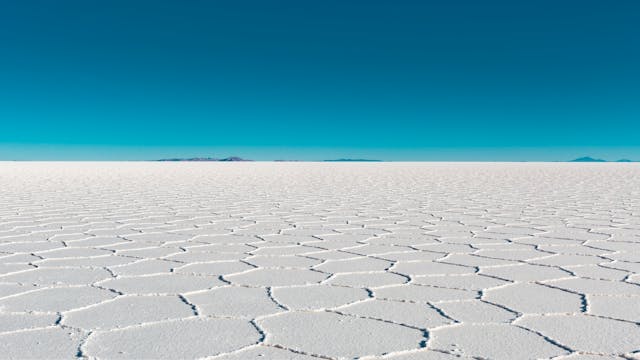
Bolivia’s lithium resources give the country a major place in global energy transition discussions. The Salar de Uyuni is one of the world’s most famous salt flats and is widely associated with lithium-rich brines. Lithium is essential for many rechargeable batteries used in electric vehicles, consumer electronics and grid storage.
But Bolivia’s lithium story is not simple. Having a major resource does not automatically create a strong battery industry. The country has faced technical, financial, political and environmental challenges in turning lithium reserves into large-scale production. State-led industrialization has aimed to keep more value inside Bolivia, but progress has often been slower than expected.
Lithium also raises serious local questions. Salt flats are not empty spaces. They are connected to Indigenous communities, tourism, water systems, agriculture, llama herding and regional identity. Lithium extraction can create concerns about water use, consultation, local benefits and environmental damage. These questions are central to whether Bolivia’s lithium strategy will be seen as national development or another form of extraction.
The lithium issue makes Bolivia different from many other energy profiles. Bolivia is not only a country trying to consume cleaner energy. It is also a country that could supply materials for the global clean-energy economy. The hard question is whether it can do that while protecting local communities and building domestic industrial value.
Energy Security in a Landlocked Country
Bolivia’s landlocked geography makes energy security more complicated. The country does not have direct ocean access, so fuel imports, export routes and heavy equipment logistics depend on neighboring countries, ports, pipelines and overland transport. This affects the cost and reliability of energy supply.
Energy security in Bolivia used to focus heavily on protecting gas export revenue and managing state control over hydrocarbons. Today, the issue is broader. Bolivia must manage declining gas production, fuel import needs, foreign currency pressure, rural electricity access and grid reliability. The energy system is no longer protected by the old gas boom.
The country’s pipeline network remains a strategic asset. Even if Bolivia exports less of its own gas, its infrastructure may still matter for regional flows between Argentina and Brazil. This could give Bolivia a new role as an energy transit country. But transit revenue is not the same as export revenue, and it may not replace the fiscal strength that gas exports once provided.
For households and businesses, energy security is more practical. It means fuel at the pump, power in the home, diesel for farms, electricity for mines and stable prices. Bolivia’s energy future will be judged less by resource potential than by whether the system can deliver reliable supply.
Energy Policy, State Companies and Public Trust
Bolivia’s energy sector is deeply tied to the state. YPFB is central to oil and gas, while state power institutions play a major role in electricity planning and generation. This state-led model reflects Bolivia’s political history and the belief that natural resources should support national development.
The advantage of this model is strategic control. The government can direct investment toward social goals, electrification, subsidies and domestic industrial policy. The weakness is that state companies can face financial strain, political pressure and slow decision-making. When production falls or imports become expensive, the burden often lands on the public budget.
Energy policy in Bolivia must balance several goals at once. It must keep fuel and electricity affordable, attract investment, protect state control, develop renewables, manage lithium, and avoid social conflict. These goals can pull in different directions. For example, low fuel prices help consumers but can increase subsidy costs. Foreign investment can speed up lithium development but may create fears of losing national control.
Public trust is therefore essential. Energy reforms in Bolivia are not only technical decisions. They touch national identity, regional inequality, Indigenous rights, transport costs and household budgets. A successful energy policy must explain who benefits, who pays and how the country will avoid repeating the mistakes of past resource booms.
The Main Energy Challenges Facing Bolivia
Bolivia’s first major energy challenge is the decline of natural gas. Gas supported exports, government revenue and electricity generation. As production weakens, the country must find replacement income, protect domestic supply and rethink its role in regional energy markets.
The second challenge is fuel import dependence. Diesel and gasoline shortages show how quickly energy problems can spread into agriculture, transport, prices and politics. A country can have electricity capacity and still face an energy crisis if liquid fuels are scarce or too expensive to import.
The third challenge is infrastructure. Bolivia needs stronger transmission, better rural access, modern distribution systems and more flexibility for solar and wind. Renewable energy cannot grow at full speed if the grid is not ready.
The fourth challenge is lithium execution. Bolivia has a globally important resource, but the country must turn it into real industrial value while managing water, environmental and community concerns.
The fifth challenge is policy credibility. Investors, communities and consumers all need confidence that energy decisions are stable, fair and realistic. Without that trust, even strong resource potential can remain underdeveloped.
The Future of Energy in Bolivia
Bolivia’s energy future will depend on whether the country can move beyond the old gas-centered model without creating a new dependency. Natural gas will remain important, but it is no longer enough to define the national energy strategy. Oil products will remain essential for transport, but fuel imports and subsidies are becoming harder to manage. Hydropower, solar, wind, biodiesel and lithium all offer paths forward, but each requires infrastructure, investment and public trust.
The central question is whether Bolivia can connect its natural advantages to a practical energy system. The country has gas infrastructure, mountain hydropower, highland solar resources, agricultural biofuel potential and globally important lithium deposits. Its challenge is not a lack of energy resources. Its challenge is turning those resources into reliable power, stable fuel supply, stronger industry and long-term economic resilience.