Belgium’s energy infrastructure reflects the country’s unusual position at the centre of Western Europe. It has a relatively small domestic market, limited space for major energy developments and close physical links with several neighbouring systems. As a result, Belgium’s security of supply depends not only on national power plants and pipelines, but also on cross-border electricity trading, gas transit, offshore connections and access to the wider European market.
This creates a different infrastructure challenge from that faced by a large energy-producing country. Belgium must move substantial volumes of electricity and gas through a compact, heavily developed territory while preparing its networks for offshore wind, industrial electrification, hydrogen and carbon dioxide transport. The central issue is therefore not simply whether Belgium can build more energy capacity. It is whether its electricity and gas networks can connect new sources, manage changing flows and maintain reliability during a major energy transition.
Cross-Border Connections Support Belgium’s Electricity System
Elia operates Belgium’s high-voltage transmission network, which includes infrastructure ranging from 30 kilovolts to 380 kilovolts. The system links power stations, major industrial users, regional distribution networks and electricity connections with neighbouring countries.
Belgium exchanges electricity directly with France, the Netherlands, Germany and the United Kingdom. These connections allow electricity to move in either direction according to generation levels, market prices and system requirements. They are particularly important for a country where domestic production can change significantly because of nuclear reactor availability, gas-fired generation, wind conditions and electricity demand.
The Nemo Link subsea cable connects Belgium with the United Kingdom. Its capacity of 1,000 megawatts gives both markets another source of flexibility and allows surplus electricity to cross the North Sea. Belgium is also connected to Germany through ALEGrO, another 1,000-megawatt high-voltage direct-current link. These projects have reduced Belgium’s dependence on its traditional electricity borders with France and the Netherlands.
Interconnection does not remove the need for domestic investment. Imported power still has to move through Belgium’s internal network, and electricity produced in coastal or offshore areas must reach consumers in Brussels, Antwerp, Ghent, Liège and the country’s industrial zones. Congestion inside Belgium can therefore limit the practical value of additional generation or cross-border capacity.
Offshore Wind Is Reshaping the Coastal Grid
The North Sea has become one of the most important drivers of Belgian grid development. Belgium’s first offshore wind zone is already connected to the mainland through the Modular Offshore Grid, which collects electricity from several wind farms and carries it toward the onshore network.
The next phase is centred on the Princess Elisabeth Zone and Princess Elisabeth Island. The artificial energy island is being constructed around 45 kilometres from the Belgian coast and is intended to collect electricity from a new generation of offshore wind farms. It will connect offshore cables, substations and transmission equipment in one location before sending electricity to the mainland.
The project also has a wider European role. The island is designed to support future international electricity links, allowing offshore wind energy to move between Belgium and other North Sea markets. This could make it part of a more interconnected offshore grid rather than simply a connection point for Belgian wind farms.
The scale of the offshore programme places pressure on onshore infrastructure. New cables arriving at the coast will be useful only if the inland grid can carry the electricity toward major demand centres. This makes Ventilus one of the country’s most significant transmission projects. The planned 380-kilovolt corridor across West Flanders is intended to transport offshore electricity inland, support new industrial demand and strengthen connections around the coastal region.
Ventilus received its environmental permits in 2026, allowing Elia to prepare for construction. The project has also shown how difficult it can be to add major electricity infrastructure in a densely populated country. Route selection, overhead lines, underground cable proposals, landscape effects and compensation for nearby residents have all influenced the development process.
The Interior Network Must Carry More Electricity
Belgium’s electricity transition will increase demand on parts of the grid far from the coast. Electric vehicles, heat pumps, data centres, battery projects and the electrification of industrial processes are changing where and when electricity is consumed.
Heavy industry around Antwerp, Ghent and the Walloon industrial corridor may require large new grid connections as companies replace fossil-fuel processes with electric equipment or hydrogen production. At the same time, more households and businesses are installing solar panels, chargers and electrically powered heating systems. This creates two-way flows in parts of the distribution network that were originally designed mainly to deliver electricity from central power stations to consumers.
The Boucle du Hainaut project is intended to strengthen the 380-kilovolt network between western and central Belgium. Its planned transmission capacity of 6 gigawatts would help move electricity across the country, connect new generation and support industrial demand. Together with Ventilus, it forms part of the inland backbone needed to make offshore wind and additional cross-border trading useful at national scale.
The condition of lower-voltage infrastructure will be equally important. Regional distribution operators must reinforce local cables, substations and digital control systems as electricity consumption becomes more decentralised. Smart meters and more active demand management can reduce pressure during peak periods, but they cannot replace physical investment where networks lack sufficient capacity.
Zeebrugge Connects Belgium to International Gas Markets
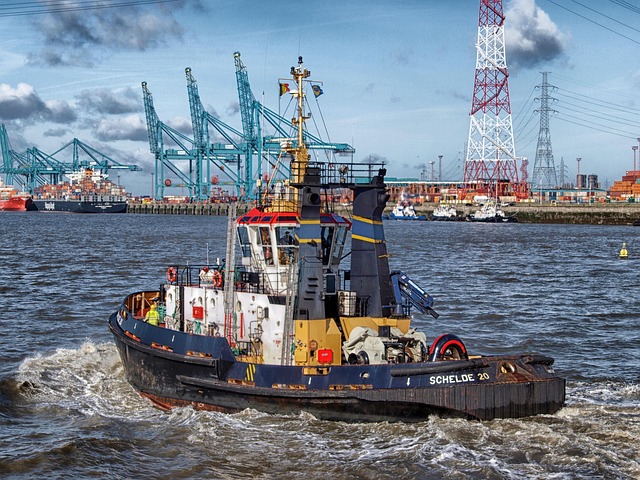
Belgium’s energy infrastructure extends well beyond electricity. Fluxys operates the national gas transmission system, the Zeebrugge liquefied natural gas terminal and the underground gas storage facility at Loenhout.
Zeebrugge is one of Belgium’s most strategically important energy locations. LNG delivered by ship can be unloaded, stored, converted back into gas and injected into the Belgian transmission network. From there, it can supply Belgian consumers or move into neighbouring markets. The terminal has a regasification capacity of approximately 17 billion cubic metres per year and storage capacity of 566,000 cubic metres of LNG.
This infrastructure became more important as European countries reduced their reliance on Russian pipeline gas. Belgium’s location and strong connections with the Netherlands, Germany, France, the United Kingdom and Norwegian supply routes allow it to operate as both a consumer market and a transit country.
Loenhout provides a strategic buffer by allowing gas to be stored underground and withdrawn when demand rises. Its role is particularly important during winter, when gas consumption increases and gas-fired power stations may also be required to support the electricity system.
Fluxys is expanding the pipeline corridor between Zeebrugge and the interior. A new section between Knokke-Heist and Evergem is intended to increase the amount of gas that can enter the Belgian network from the west. Together with an earlier section toward Brussels, the project will add substantial transport capacity from Zeebrugge while supporting flows toward Germany and new gas-fired power generation.
Gas Pipelines Are Being Prepared for New Molecules
Belgium does not plan to use its gas network in exactly the same way indefinitely. Infrastructure development increasingly includes hydrogen, biomethane and captured carbon dioxide.
The new Zeebrugge–Evergem pipeline is being built so that it can eventually transport hydrogen or carbon dioxide if market conditions require it. This reflects a wider Belgian strategy of using existing energy corridors and industrial areas as the starting point for new low-carbon networks.
Fluxys began constructing initial hydrogen and carbon dioxide infrastructure in the Antwerp port region in 2025. Antwerp contains refineries, chemical plants, logistics facilities and other large industrial energy users, making it a logical early market for shared hydrogen and carbon-management infrastructure. A connection between Kallo and Zelzate could also help link industrial clusters in Antwerp and Ghent.
The long-term value of these networks will depend on demand. Hydrogen pipelines require producers, import terminals and industrial customers willing to make long-term commitments. Carbon dioxide networks require capture projects, transport agreements and access to permanent storage sites, potentially beneath the North Sea. Building ahead of demand may support industrial investment, but building too early could leave expensive infrastructure underused.
Belgium’s Main Constraint Is Network Delivery
Belgium already possesses many of the assets required for a highly connected energy system: international electricity cables, a dense transmission network, an offshore grid, LNG import capacity, gas storage and access to major European industrial markets.
The harder task is coordinating the next stage. Offshore wind development depends on Ventilus, inland transmission reinforcement and the timely completion of offshore connections. Industrial electrification depends on stronger substations and reliable access to high-capacity power. Hydrogen and carbon dioxide infrastructure depend on projects developing across several industrial clusters at roughly the same time.
Belgium’s infrastructure strategy is therefore becoming less focused on isolated energy facilities and more focused on integrated corridors. Electricity, gas, hydrogen, carbon dioxide and offshore connections increasingly share the same ports, industrial zones and planning processes. The country’s future position as a European energy hub will depend on whether these networks are completed quickly enough to meet rising demand while remaining affordable and acceptable within Belgium’s limited space.